How to List an AI Domain for Sale: The Complete Step-by-Step Guide to Selling Your .ai Domain
Most people who own a valuable .ai domain have no idea how to sell it. They list it on one platform, wait a few weeks, get no responses, lower the price, get low-ball offers from resellers, and eventually give up or let the domain expire. That cycle is avoidable. Listing an AI domain correctly — on the right platforms, with the right pricing, at the right time — is not complicated, but it does require understanding a few key steps that separate successful sellers from frustrated ones.
This guide covers everything from pricing your domain and choosing marketplaces, to writing a listing that attracts serious buyers, negotiating offers without giving away value, and completing the transfer securely through escrow. Whether you own a premium one-word .ai domain like Amber.ai ($115,000) or a strategic phrase domain, the process covered here applies.
Table of Contents
- Before You List: Prepare Your Domain for Sale
- Step 1 — Research and Set Your Price
- Step 2 — Choose Your Listing Platform(s)
- Step 3 — Create Your Marketplace Listing
- Step 4 — Set Up Escrow and Payment Processing
- Step 5 — Qualify Incoming Buyers
- Step 6 — Negotiate and Close the Deal
- Step 7 — Transfer the Domain
- Common Mistakes to Avoid
- Frequently Asked Questions
Before You List: Prepare Your Domain for Sale
Before you create a single listing, there is housekeeping that determines whether the sale goes smoothly. Skipping these steps creates friction that buyers notice — and leverage they use against you.
Renew your domain. This is the single most important preparation step. A domain with fewer than 12 months of registration remaining is a liability. Any buyer considering your domain will either demand you renew it as a condition of sale or use the short expiry as leverage to reduce their offer. Renew for at least one year, ideally two, before you list.
Remove transfer locks. If your domain is currently locked at the registry level (a standard security feature), you will need to unlock it before a transfer can proceed. Most registrars allow this through their control panel with a 60-day unlocking window that then locks again automatically. Plan this in advance so you are not scrambling during negotiations.
Update WHOIS information. Ensure your WHOIS contact details are current and that you have access to the administrative email address listed on the domain. You will need to respond to transfer authorization requests from your registrar, and if your contact information is outdated or blocked, the transfer process stalls.
Gather your transfer credentials. Different registrars handle transfer authentication differently. Some require a transfer EPP code (also called an auth code) that you must retrieve from your registrar's dashboard. Others require you to approve the transfer via email or API confirmation. Knowing your registrar's specific process before you are in the middle of a transaction saves days of delay.

Step 1 — Research and Set Your Price
Pricing your domain correctly is the difference between receiving serious inquiries and spending months with no traction. Overpricing is the most common mistake, and it is understandable — sellers naturally anchor to what they imagined the domain might be worth rather than what the market will actually pay.
Use comparable sales as your primary benchmark. NameBuzz tracks verified and widely reported .ai domain transactions that serve as real market data, not guesswork. Useful comparables include Bot.ai at $1.2 million, Cloud.ai at $600,000, Lotus.ai at $400,000, Law.ai at $350,000, Speed.ai at $165,000, Amber.ai at $115,000, and stt.ai at $74,000. Study these transactions to understand what structural, commercial, and branding factors drive value in the .ai namespace.
Consider three pricing approaches:
-
Buy It Now (BIN) price: A fixed price at which a buyer can immediately purchase. Use this if you want a clean, fast transaction and have done enough research to be confident in your valuation.
-
Auction starting bid: Set a low minimum and let competitive bidding determine the final price. This works best when you have genuine scarcity and multiple potential buyers. GoDaddy Auctions is the primary platform for .ai domain auctions.
-
Offer-based pricing: No BIN, no auction floor — just invitations for buyers to submit offers. This approach is common for premium domains priced above $50,000 where the seller wants maximum flexibility and is willing to negotiate. Sedo's Make Offer feature is designed for this.
For most sellers, a BIN price backed by comparable data is the cleanest approach. If you are unsure of your domain's precise market value, setting a slightly higher BIN and enabling "Make an Offer" simultaneously is a reasonable compromise.
Step 2 — Choose Your Listing Platform(s)
Not all domain marketplaces are equal for .ai domains. Here is what each major platform offers:
Afternic: The largest IDN marketplace and the primary source of exposure for .ai domains. Afternic listings feed into GoDaddy's buyer network — one of the largest in the industry. Every premium .ai domain should have an Afternic listing. Their DRS (Distribution Registration System) also means that when a buyer finds your domain through Afternic and parks it at a different registrar, your information stays current. Afternic charges a one-time listing fee plus a success fee upon sale.
Sedo: A full-service domain marketplace with a strong brand and active buyer database. Sedo also offers brokerage services where their team actively seeks buyers for your domain. This is valuable for domains priced above $25,000 where passive listings may not generate sufficient buyer flow. Sedo's Make Offer feature allows you to set a minimum acceptable price while leaving the transaction open.
GoDaddy Auctions: Best for domains priced under $50,000 where auction dynamics can work in your favor. GoDaddy's bidder pool is active and includes both investors and end buyers. Listing fees are modest and there is significant traffic from domain searchers. GoDaddy Auctions also integrates with Afternic and GoDaddy's broader marketplace.
Dan.com: Operated by Undeveloped, Dan.com offers a streamlined listing experience with flat transaction fees (no percentage-based success fees above a threshold). Dan is popular with sellers who want simplicity and lower overhead. The buyer pool is smaller than Afternic or Sedo, but the platform's clean transfer process makes closing straightforward.
Direct broker representation: For domains priced above $100,000, direct broker representation is often the fastest path to a qualified buyer. Grit Brokerage, Brandify, and other established domain brokers have buyer relationships and transaction expertise that can justify their commission (typically 10% to 15%). They also handle negotiation, which most sellers are not practiced at.
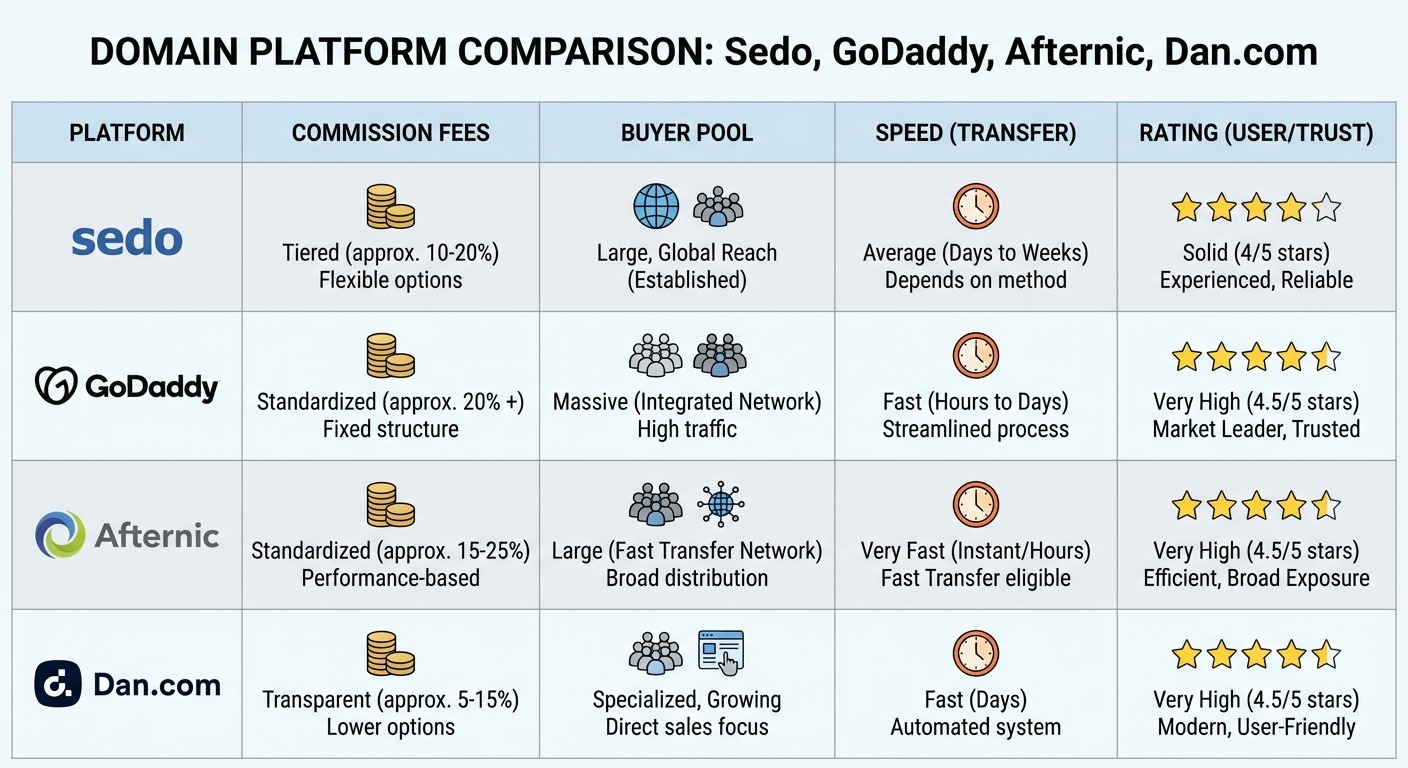
Most experienced sellers list on at least two platforms simultaneously — typically Afternic plus Sedo, or Afternic plus Dan — to maximize exposure. Listing on multiple platforms at the same BIN price is standard practice and not considered conflicting. Just make sure your WHOIS information and pricing are consistent across all listings to avoid buyer confusion.
Step 3 — Create Your Marketplace Listing
A good listing is not just the domain name and a price. It is a brief commercial case for why the domain is worth buying. Buyers — especially end buyers (startups, companies, founders) rather than resellers — respond to listings that communicate brand potential, keyword value, and commercial relevance.
What a strong listing description includes:
- The commercial meaning or conceptual value of the domain
- The primary industry or use case the name suits
- Any relevant comparable sales that establish market precedent
- A clear call to action (BIN purchase or offer submission)
What to avoid:
- Vague copy like "premium domain for sale" — this tells the buyer nothing
- Exaggerated claims about SEO value that cannot be substantiated
- Pricing that is obviously above market, which signals the seller is unrealistic
Here is a practical example of a listing description for a domain like Law.ai:
Law.ai is the definitive digital identity for the legal technology sector. One of the most in-demand category terms in AI, Law maps directly to legal AI applications including contract analysis, case prediction, compliance automation, and legal research tools. With comparable .ai sales including Law.ai at $350,000, the market has consistently rewarded exact-match category domains at significant premiums. Make an offer or use the Buy It Now option to secure Law.ai for your legal AI brand.
This description is specific, benchmarked, and action-oriented. It gives a buyer enough context to understand the domain's value and a reason to act. Replace the domain name and specifics for whatever name you are selling, but keep the structure of specificity and benchmark evidence.
Step 4 — Set Up Escrow and Payment Processing
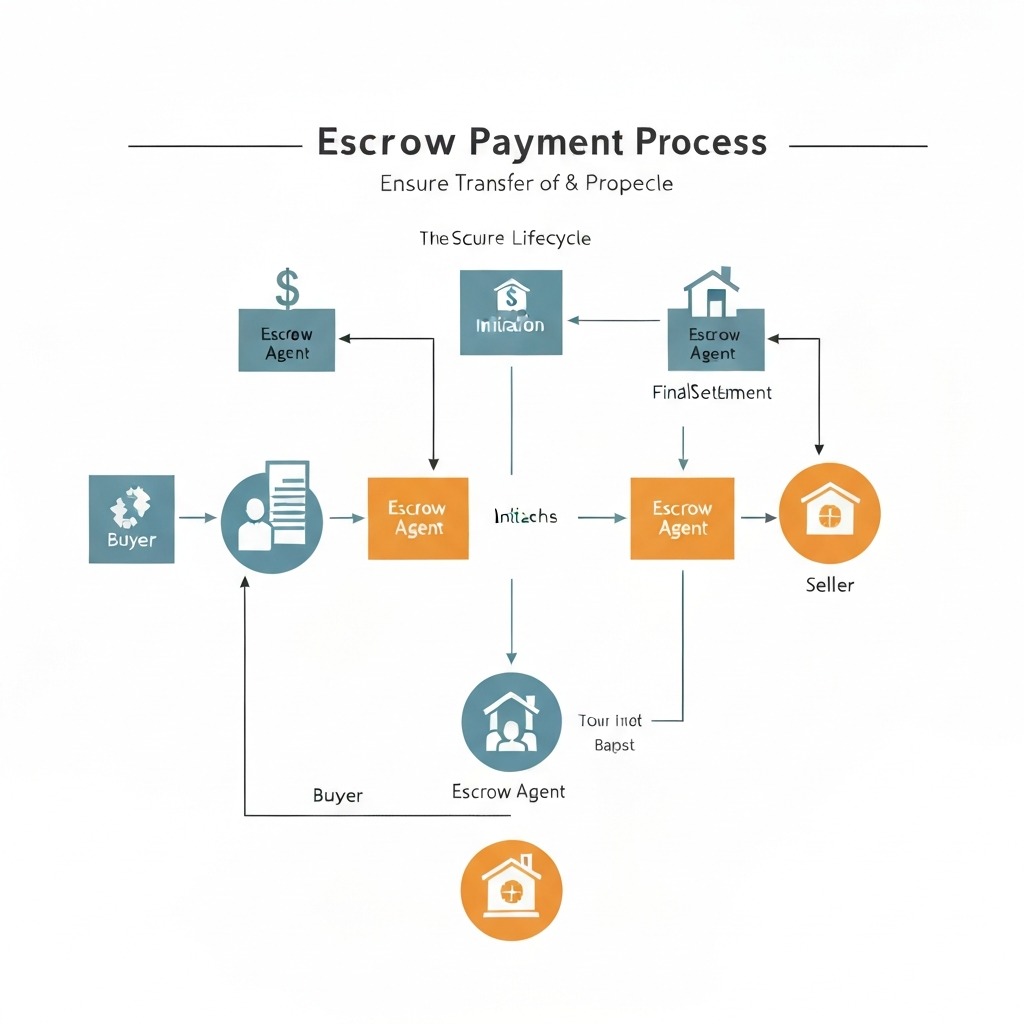
For any domain sale above $1,000, escrow is non-negotiable. Both parties need a trusted intermediary to hold funds during the transfer process. Attempting a bank transfer or payment app transaction for a domain sale above five figures is a recipe for fraud or disputes.
Escrow.com is the industry standard for domain transactions. They offer transaction tiers that match domain sale values, with fees typically ranging from 0.5% to 1% of the transaction value, capped at tiers. Escrow.com handles USD transactions and is familiar with domain transfer verification.
Escrow.net is an alternative with similar functionality. Some sellers prefer it for lower fees on transactions under $5,000.
Sedo's internal escrow is available for transactions within the Sedo platform. This is convenient if you are also using Sedo as your marketplace, as the escrow and transfer process is handled within a single system.
Wire transfer for high-value sales: For transactions above $100,000, some sellers and buyers prefer a direct wire transfer with escrow verification. This is more complex to arrange but is not unusual for seven-figure .ai domains.
Never accept personal checks, cashier's checks from unknown parties, or payment via gift card or cryptocurrency from unfamiliar buyers in a private transaction. These are the primary vectors for fraud in domain sales. If a buyer insists on any unconventional payment method, walk away.
Step 5 — Qualify Incoming Buyers
When your first inquiries start arriving, separating serious buyers from time-wasters is critical. Every serious inquiry deserves a prompt and professional response. Curious inquiries deserve a brief acknowledgment, not a detailed explanation.
Signs of a serious buyer:
- States an intended use or business context
- Mentions a timeline or budget range
- Asks specific questions about the domain's history, traffic, or previous use
- Has a broker or legal representative already engaged
- Responds promptly and professionally to your communications
Red flags:
- "What is your best price?" with no stated context
- Requests to see the domain before any price discussion
- Unusual payment method requests
- Reluctance to use escrow (a legitimate buyer should have no objection)
- Generic inquiries that could be sent to any domain seller
A response template for a new inquiry might look like this:
Thank you for your interest in [Domain]. To help me understand the context of your inquiry, could you share how you intend to use the domain and whether you are working with a budget range? I am flexible on terms for serious buyers and am happy to discuss via email or a brief call. For reference, comparable .ai transactions include [benchmark sale] at [price].
This response signals professionalism, sets expectations, and filters for buyers who are genuinely interested versus those collecting pricing data.
Step 6 — Negotiate and Close the Deal
Negotiation is where most sellers either leave money on the table or kill the deal. Here are the key principles:
Never accept a first offer as-is. Almost every first offer from a buyer is an opening position with room to improve. This is not gamesmanship — it is market mechanics. A buyer who offers $30,000 for your $75,000 BIN listing is not insulting you; they are testing whether you will come down. Counter-offer confidently with reference to your comparable data.
Know your minimum. Before entering any negotiation, know your absolute floor. This should account for your cost basis (what you paid for the domain originally, registration costs, any development investment) and the comparable market data you used to set your original price. Walking away from a deal that does not meet your minimum is not failure — it is discipline.
Do not reveal your urgency. Buyers who sense you need to sell will use that against you. If your domain is about to expire, if you need liquidity, or if you have another offer pending, do not disclose these facts. Negotiate from a position of patience and confidence.
Document everything in writing. All offers, counter-offers, and agreed terms should be exchanged via email or through the platform's messaging system. Verbal agreements are not enforceable in domain transactions, and miscommunication about agreed terms is one of the most common deal-killers.
Step 7 — Transfer the Domain
Once both parties have agreed on terms and the buyer has deposited funds into escrow, the transfer process begins. Here is the standard sequence:
- Buyer deposits funds into escrow — Escrow.com or equivalent confirms receipt and notifies both parties
- Seller initiates transfer authorization — Log into your registrar, retrieve the transfer auth code (EPP code), and provide it to the buyer or escrow service as required
- Buyer confirms receipt of transfer auth — They verify it matches and initiate the transfer request at their registrar
- Registry processes the transfer — For .ai domains, this is handled by the .ai registry (Met Namibia Communications). Processing takes 5 to 10 business days typically
- Escrow releases funds to seller — Upon confirmed transfer completion, escrow releases the buyer's deposit to your account
- Confirmation and follow-up — Verify the domain appears in the buyer's registrar account, confirm the funds have arrived in your account, and close out any escrow case
Post-transfer best practices: Once the transfer is complete and funds are released, send the buyer a confirmation email summarizing the transaction and offering a brief window for any transfer verification questions. This is professional, reduces dispute risk, and builds a positive reputation in the domain community.
Common Mistakes to Avoid
Listing at an inflated price "to leave room for negotiation": Buyers for .ai domains do their research. If your BIN price is 3x above comparable sales, you will receive no serious inquiries and your listing will appear inactive. Price accurately from the start.
Not renewing before listing: A domain with 60 days to expiry signals instability and gives buyers a negotiating lever. Renew first.
Ignoring transfer locks: If your domain is registry-locked and you try to initiate a transfer while in active negotiations, the process will stall and the buyer may lose confidence. Unlock it in advance.
Accepting off-platform payment requests: If a buyer asks you to complete the transaction outside the platform or escrow system, that is a red flag. Insist on the standard process even if it feels slower.
Forgetting to unlock WHOIS privacy: Some sellers have WHOIS privacy protection enabled, which hides your contact information. While this protects privacy, it can also prevent buyers from finding your contact details to make inquiries. A temporary WHOIS disclosure during active negotiations is worth considering.
Frequently Asked Questions
Where is the best place to list a .ai domain for sale?
Afternic and Sedo are the two primary platforms for .ai domain listings. Afternic offers the largest buyer network and feeds into GoDaddy's marketplace. Sedo provides both marketplace listing and optional brokerage services. Most sellers list on both simultaneously. Dan.com is a solid secondary option for a streamlined, lower-fee listing experience.
How do I set the right price for my AI domain?
Research comparable .ai domain sales on NameBuzz to establish benchmarks. Look at structurally similar domains (same length, same category match, same extension) and use those as anchors. Set a Buy It Now price slightly above your expected floor and enable Make Offer functionality to capture buyers who are interested but not at your BIN price. Review and adjust pricing every 60 days if you are not receiving inquiries.
Should I use a domain broker to sell my .ai domain?
If your domain is valued at $50,000 or more, a broker is generally worth the commission. Brokers like Grit Brokerage, Brandify, and Sedo Brokerage have buyer relationships and handle negotiation professionally. For domains below $10,000, a direct marketplace listing with BIN pricing is usually sufficient without broker involvement.
How long does the transfer process take after a sale is agreed?
Once both parties have agreed on terms and the buyer has deposited funds into escrow, the domain transfer for a .ai domain typically completes within 5 to 10 business days. The variable is the .ai registry processing time, which is generally smooth but not instant. Do not expect same-day or next-day transfers even if both parties are responsive.
What fees do I pay when selling an AI domain?
Typical costs include: marketplace listing fees (Afternic charges a small listing fee plus success fee; Sedo charges a percentage of the sale; Dan.com has flat fees), escrow fees (0.5% to 1% of transaction value via Escrow.com), and any optional broker commission (10% to 15% for premium domains). Factor these into your net proceeds calculation when setting your asking price.