How to List Your .ai Domain for Sale: Complete Seller's Guide
Selling a .ai domain successfully requires more than simply posting a price — it demands a strategic approach to presentation, pricing, marketplace selection, and buyer management. This comprehensive guide walks you through every step of the process, from creating a high-converting landing page to completing a secure .ai domain transfer through escrow.
Maya Chen, Domain Investment Analyst · Last updated April 2026
Table of Contents
- Why .ai Domains Are in High Demand Right Now
- Creating a Landing Page That Converts
- Pricing Strategy for .ai Domains
- Choosing the Right Marketplaces
- Writing Compelling Domain Listings
- Handling Inquiries and Negotiation
- Escrow Best Practices for .ai Domain Sales
- Domain Transfer Mechanics for the .ai TLD
- Post-Sale Considerations
- Sources
Why .ai Domains Are in High Demand Right Now
Before diving into the mechanics of listing your domain, it is worth understanding why the .ai domain market is so active in 2026. This context will help you position your listing more effectively and negotiate with confidence.
The AI Industry's Explosive Growth
The artificial intelligence industry continues its rapid expansion, with thousands of new AI companies launching every quarter. Each of these companies needs a digital identity, and the .ai extension has become the preferred choice for startups and enterprises that want to immediately signal their AI focus. This creates a deep and growing pool of potential buyers for quality .ai domains.
The numbers tell the story. Landmark sales like AI.com at $70 million, Data.ai at $1.8 million, Voice.ai at $1.5 million, Chat.ai at $1.2 million, and Bot.ai at $1.2 million demonstrate that well-funded companies are willing to pay significant premiums for the right .ai domain. Even domains outside the ultra-premium category regularly sell for five and six figures. Work.ai sold for $1.05 million, Security.ai and Driver.ai each sold for $1 million, and Get.ai achieved $909K.
Increasing Corporate Adoption
What is particularly noteworthy about the current market is the shift from speculative domain purchases to corporate end-user acquisitions. Major companies across industries — from healthcare and finance to manufacturing and education — are actively seeking .ai domains for new AI-focused products and divisions. This end-user demand is the engine that drives sustainable price appreciation in the .ai domain market.
For a detailed analysis of how the market has evolved, see our coverage of AI domain market trends in 2026.
 ---
---
Creating a Landing Page That Converts
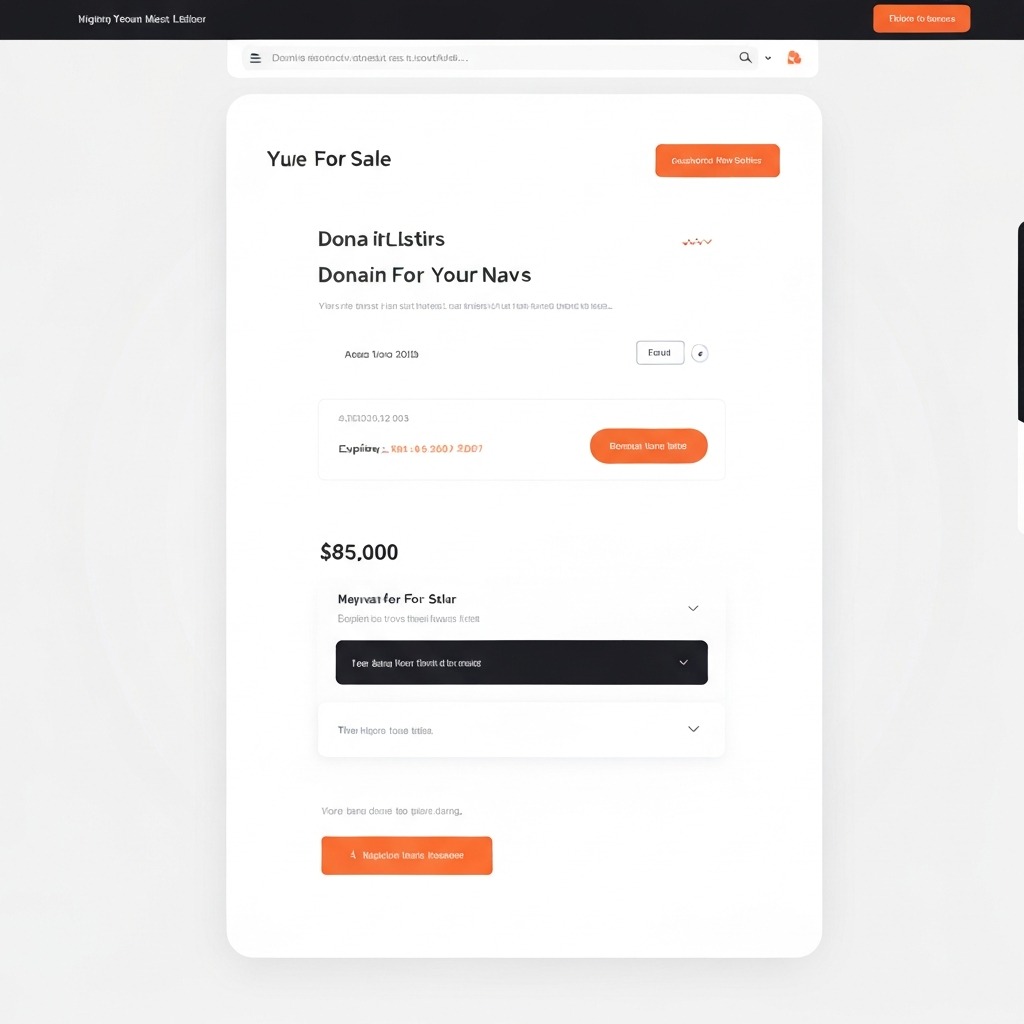
The first thing a potential buyer sees when they type your domain into a browser is your landing page. This single page can make or break a sale. A professional, well-designed landing page signals that the domain is owned by a serious seller and encourages legitimate inquiries.
Essential Landing Page Elements
Every effective domain-for-sale landing page should include the following components:
The domain name displayed prominently. The domain itself is the product. Display it in large, clean typography at the top of the page. Use a professional font and ensure it is immediately visible without scrolling.
A clear "This domain is for sale" statement. Do not leave any ambiguity. Visitors should instantly understand that the domain is available for purchase. A simple, direct statement below the domain name accomplishes this.
A contact or inquiry form. Make it effortless for interested parties to reach you. A simple form with fields for name, email, company, and message is sufficient. Avoid requiring excessive information that might discourage inquiries. Every additional required field reduces your conversion rate.
A brief value proposition. In two or three sentences, explain why this domain is valuable. Reference the AI industry's growth, the brandability of the name, and any unique characteristics that make the domain desirable.
Professional design and branding. The landing page should look polished and trustworthy. Use a clean white or dark background, professional typography, and minimal visual clutter. Avoid ads, pop-ups, or anything that looks spammy. Many buyers are executives or startup founders — your page should match their expectations.
Landing Page Services and Tools
Several services specialize in domain landing pages. Most major registrars offer built-in landing page templates. Additionally, marketplace platforms like Sedo and Dan.com provide landing page solutions that integrate directly with their sales infrastructure, handling inquiries and negotiations through their platforms.
For sellers who want maximum control, building a custom landing page using a simple HTML template hosted on the domain itself gives complete flexibility over design and messaging. This approach works particularly well for premium domains where you want the presentation to match the asking price.
Common Landing Page Mistakes to Avoid
Displaying the price on the landing page. For most .ai domains, it is better to invite offers or inquiries rather than publishing a fixed price. Displaying a price can anchor negotiations unfavorably and may deter buyers who would have paid more through a negotiation process. The exception is if you have a firm, competitive price and want to attract transactional buyers who prefer immediate clarity.
Using generic parking pages. Registrar-provided parking pages with ads and generic templates signal that the domain owner is not a serious seller. These pages generate almost no legitimate buyer inquiries and can actually suppress demand by making the domain appear abandoned or low-priority.
Neglecting mobile responsiveness. Many domain buyers will check your landing page on a mobile device. Ensure the page renders correctly on smartphones and tablets, with the inquiry form fully functional on all screen sizes.
Pricing Strategy for .ai Domains
Pricing is perhaps the most critical — and most challenging — aspect of listing a .ai domain for sale. Price too high, and you will deter qualified buyers. Price too low, and you leave money on the table.
Research Comparable Sales
The foundation of any sound pricing strategy is comparable sales data. Before setting a price, research what similar .ai domains have sold for. NameBio.com is the most comprehensive database of verified domain sales and should be your primary reference.
Look for domains with similar characteristics to yours: same word length, same category, similar commercial relevance. For example, if you own a single-word .ai domain related to a specific industry, look at what other industry-specific single-word .ai domains have sold for. Sales like Law.ai at $350K, Music.ai at $275K, and Speed.ai at $165K provide useful reference points for single-word names outside the ultra-premium category. Our analysis of the most expensive .ai domain sales records provides a comprehensive benchmark dataset.
Understanding Pricing Models
There are three primary pricing approaches for domain sales:
Fixed price (Buy It Now). You set a specific price and buyers can purchase immediately. This works well for domains in the entry-level to mid-market range where you have a clear sense of market value and want to attract transactional buyers. The advantage is simplicity; the disadvantage is that you might underprice or overprice relative to what a negotiated deal would yield.
Make Offer. You invite buyers to submit offers without publishing a price. This is the preferred approach for premium .ai domains because it allows the market to reveal what buyers are willing to pay. You can set a minimum offer threshold to filter out low-quality inquiries. The disadvantage is that the negotiation process takes longer.
Auction. You list the domain in a timed auction format, either with or without a reserve price. Auctions work best when you believe there are multiple potential buyers and competition will drive the price up. They also create urgency, which can accelerate the sales process. The disadvantage is that if the auction attracts only one bidder, you may sell below your target price unless you have set an appropriate reserve.
Setting the Right Price Range
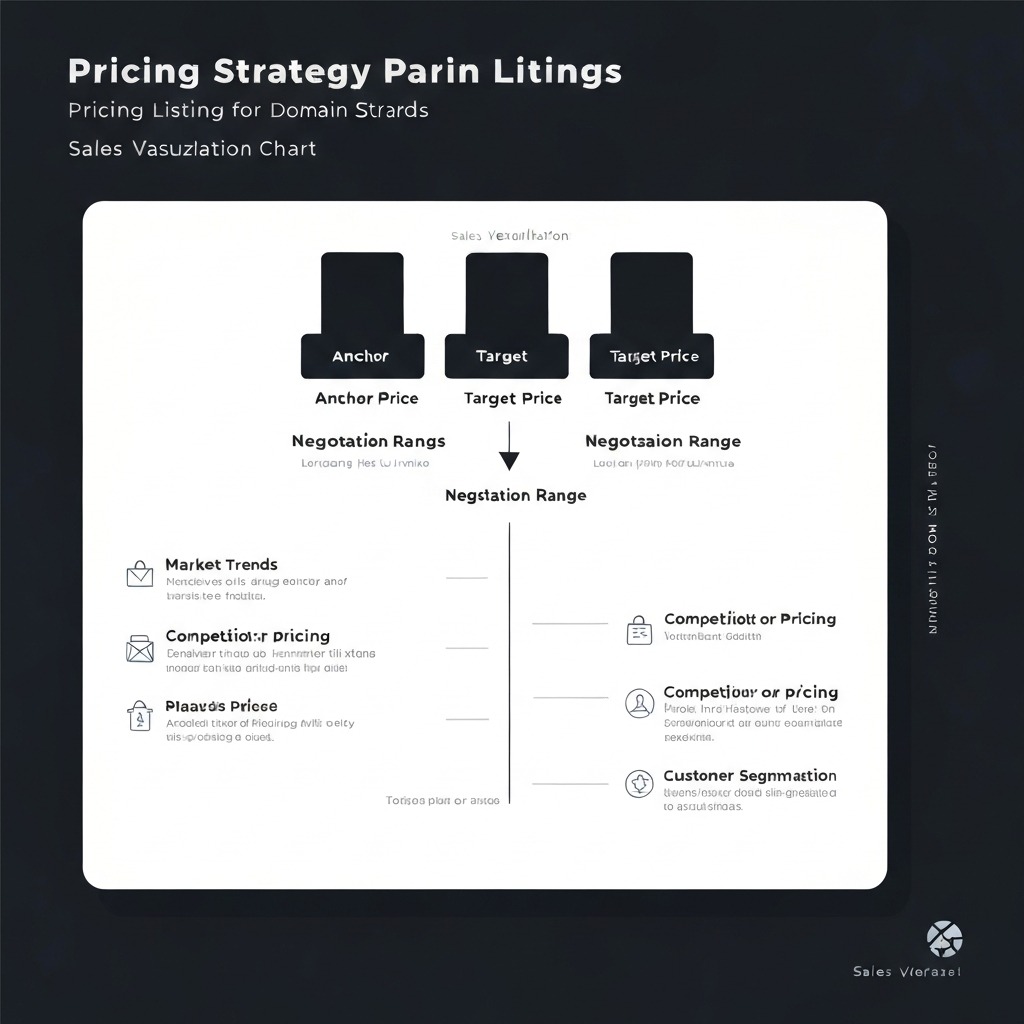
For most .ai domains, the optimal strategy is to determine a realistic market value based on comparables, then set your initial asking price at approximately 1.5 to 2 times that value. This gives you negotiation room while still appearing reasonable to informed buyers.
If you are using a Make Offer model, set your minimum offer threshold at approximately 50% to 70% of your target sale price. This filters out tire-kickers while keeping the door open for serious buyers who will negotiate upward.
The Role of Appraisals
Professional domain appraisals can provide useful context but should not be treated as definitive valuations. Automated appraisal tools (like GoDaddy's Domain Appraisal or Estibot) are useful for rough estimates but often undervalue .ai domains because their algorithms are primarily calibrated for .com transactions. For a more accurate assessment, see our detailed guide on how much your .ai domain is worth.
Choosing the Right Marketplaces
Where you list your .ai domain significantly affects your exposure to qualified buyers, the speed of sale, and the final transaction price. Most successful sellers list on multiple platforms simultaneously to maximize visibility.
Major Domain Marketplaces
Sedo — One of the world's largest domain marketplaces with a particularly strong international buyer network. Sedo offers listing, auction, and brokerage services. Their commission structure typically ranges from 15% to 20% depending on the service level. Sedo's strength is their ability to facilitate cross-border transactions and their established reputation for high-value sales. For a deep dive into .ai domain activity on Sedo, see our Sedo .ai domain sales history analysis.
Afternic (owned by GoDaddy) — Afternic's key advantage is distribution. Domains listed on Afternic can appear in search results across a network of partner registrars, dramatically increasing exposure. The platform is particularly effective for domains in the mid-market range. Commission is typically 15% to 20%. For strategies specific to GoDaddy's ecosystem, our GoDaddy .ai domain auctions guide covers the essentials.
Dan.com — Dan.com has built a reputation for clean, modern landing pages and a streamlined purchase process. Their installment payment feature allows buyers to pay in monthly installments, which can expand your pool of potential buyers for higher-priced domains. Commission is typically 9% for fixed-price listings.
Atom.com (formerly Undeveloped) — A platform that has gained traction in the premium domain segment with a focus on brandable names and startup-friendly purchasing options.
GoDaddy Auctions — GoDaddy's auction platform benefits from the registrar's massive user base. While the audience tends to be more price-sensitive than Sedo's corporate buyer network, the sheer volume of traffic can generate competitive bidding for desirable .ai domains.
Listing on Multiple Platforms
There is no rule against listing your domain on multiple marketplaces simultaneously, and most sellers do exactly that. However, be mindful of exclusivity requirements — some brokerage agreements may require exclusive listing periods. Also ensure that your pricing is consistent across platforms to avoid confusion.
Direct Sales Channels
In addition to marketplace listings, consider marketing your domain directly through social media (particularly LinkedIn and X, where AI industry professionals are active), domain investor forums like NamePros, and industry-specific channels where potential end users might see your listing. Direct sales avoid marketplace commissions entirely, which can save significant money on high-value transactions.
Writing Compelling Domain Listings
The listing description is your sales pitch. A well-written listing can differentiate your domain from hundreds of other .ai names on the market and attract higher-quality inquiries.
Structure of an Effective Listing
Open with the domain's core value proposition. In one or two sentences, state what makes this domain valuable. Focus on the end user's perspective: how will this domain benefit their business?
Describe the market opportunity. Reference the size and growth of the AI market segment your domain targets. Buyers are not just purchasing a domain — they are investing in a brand foundation for a high-growth market.
Highlight the domain's technical qualities. Mention relevant characteristics: length, memorability, type-ability, SEO value of the .ai extension, and any relevant search volume data for the keywords in your domain.
Reference comparable sales. Without being heavy-handed, mention relevant .ai domain sales that support your pricing. For example, if you are selling a single-word .ai domain, noting that similar names have sold for six or seven figures provides useful context. Sales like Adapt.ai at $300K, Lotus.ai at $400K, or Draw.ai at $500K can help frame the value of comparable names.
Include a clear call to action. Tell the buyer exactly what to do next: submit an offer, contact you directly, or click the buy button.
Language and Tone
Write in a professional, confident tone. Avoid hype, exclamation marks, and unsubstantiated claims. Your listing should read like a business proposal, not an infomercial. Use concrete data and specific examples rather than vague superlatives.
Avoid domain industry jargon that end-user buyers might not understand. Terms like "exact match domain" or "type-in traffic" are meaningful to domain investors but may confuse startup founders or corporate buyers who simply want a good brand name.
Keywords and SEO
If you are listing on platforms with search functionality, include relevant keywords naturally in your description. Think about what a buyer would search for: "AI domain," ".ai domain name," the specific industry your domain targets, and related terms.
 ## Handling Inquiries and Negotiation
Once your listings are live and your landing page is active, you will begin receiving inquiries. How you handle these inquiries directly affects whether they convert into sales and at what price.
Qualifying Buyers
Not every inquiry represents a serious buyer. Before investing significant time in negotiation, qualify the inquiry by looking for these signals:
Professional email address. Inquiries from corporate email domains (especially from AI companies, tech firms, or well-funded startups) are more likely to result in sales than inquiries from free email providers.
Specific questions about the domain. Serious buyers ask about transfer logistics, pricing flexibility, and timeline. Casual browsers tend to ask generic questions or simply send a low number with no context.
Company information. Buyers who identify themselves and their company are demonstrating seriousness. A quick search of their company can help you gauge their budget and urgency.
Negotiation Tactics
Respond promptly. Speed matters. Buyer interest can fade quickly, and delayed responses signal disinterest or unprofessionalism. Aim to respond to all inquiries within 24 hours, ideally faster.
Let the buyer make the first offer when possible. If a buyer asks "what's your price?" it is often advantageous to respond with "we're entertaining offers — what did you have in mind?" This lets the market reveal its valuation and avoids anchoring too low.
Be willing to negotiate, but know your floor. Set a firm minimum price before engaging in any negotiation. This prevents emotional decision-making during the back-and-forth. A reasonable negotiation typically results in a final price between 60% and 80% of the initial asking price.
Create urgency without being dishonest. If you have received multiple inquiries, it is appropriate to let each buyer know there is other interest. However, never fabricate competing offers — experienced buyers can usually detect bluffing, and it damages trust.
Consider payment terms. For higher-priced domains, offering installment payments can make the purchase accessible to a broader range of buyers. Platforms like Dan.com facilitate installment plans automatically.
For additional selling strategies, our guide on how to sell your .ai domain covers negotiation tactics in greater detail.
Escrow Best Practices for .ai Domain Sales
Using an escrow service is non-negotiable for domain transactions above trivial amounts. Escrow protects both buyer and seller by holding the buyer's payment in trust until the domain transfer is verified as complete.
How Domain Escrow Works
The escrow process for a .ai domain sale follows a standard sequence:
-
Agreement. Buyer and seller agree on terms: price, payment method, timeline, and which party pays the escrow fee (typically split evenly or paid by the buyer).
-
Escrow initiation. One party initiates the escrow transaction on the chosen platform. Both parties verify the terms.
-
Buyer funds escrow. The buyer sends payment to the escrow service. The escrow service verifies receipt of cleared funds.
-
Domain transfer. Once the escrow service confirms the funds are secured, the seller initiates the domain transfer to the buyer's registrar account.
-
Buyer verification. The buyer confirms that the domain has been received and is functioning correctly in their account.
-
Payment release. The escrow service releases the funds to the seller, minus any applicable fees.
Recommended Escrow Services
Escrow.com — The most widely used escrow service for domain transactions. They are licensed and regulated, support international transactions, and offer domain-specific escrow workflows. Fees are typically a small percentage of the transaction amount on a sliding scale.
Marketplace-integrated escrow. Platforms like Sedo, Dan.com, and Afternic include escrow functionality within their sales processes. Using marketplace-integrated escrow simplifies the transaction because the listing, negotiation, payment, and transfer all happen within the same platform.
Escrow Red Flags
Never agree to a transaction outside of escrow for amounts above a few hundred dollars, regardless of how trustworthy the buyer seems. Common scam patterns include buyers who insist on wire transfers before domain transfer, buyers who want to use an unknown escrow service (which may be fraudulent), and buyers who create artificial urgency to bypass security procedures.
Domain Transfer Mechanics for the .ai TLD
The .ai TLD has specific transfer characteristics that sellers should understand before listing their domains. Unlike .com transfers, which follow a standardized ICANN process, .ai domains are managed by the government of Anguilla, and the transfer process has some unique requirements.
Registrar-to-Registrar Transfers
To transfer a .ai domain from one registrar to another, the following steps are generally required:
Unlock the domain. Most registrars lock domains by default to prevent unauthorized transfers. Log into your registrar account and disable the transfer lock on the domain.
Obtain the authorization code (auth code or EPP code). This is a unique code that authorizes the transfer. Request it from your current registrar. Some registrars provide it through their control panel; others may require you to contact support.
Initiate the transfer at the receiving registrar. The buyer initiates the transfer from their end by entering the domain name and authorization code at their new registrar. The receiving registrar will process the transfer request.
Approve the transfer. Depending on the registrars involved, the current registrar may send a confirmation email to the domain's registrant email address. Approve this promptly to avoid delays.
Wait for propagation. Transfer processing times for .ai domains can vary. While some transfers complete within hours, others can take several days. Plan accordingly when setting expectations with your buyer during the escrow process.
Account-Level Transfers (Push Transfers)
If both buyer and seller use the same registrar, an account-level push transfer is usually the fastest and simplest option. This involves pushing the domain from your account to the buyer's account within the same registrar system. The process is typically instant and avoids the complexity of inter-registrar transfers.
DNS Considerations During Transfer
During a domain transfer, there can be a brief period where DNS resolution is interrupted. Advise your buyer to set up their DNS records promptly after the transfer completes. If the buyer is running an active business on a different domain and plans to redirect, they should have their DNS configuration ready before initiating the transfer.
.ai-Specific Transfer Nuances
The .ai registry, operated under the authority of Anguilla, has historically had longer processing times than major gTLD registries. Sellers should factor in potential delays and communicate realistic timelines to buyers. It is also worth noting that .ai domain registrations and transfers are typically processed through a limited number of accredited registrars, so not every registrar supports .ai domains. Verify that your buyer's chosen registrar supports the .ai TLD before initiating the transfer.
Post-Sale Considerations
Once the domain has been transferred and funds have been released from escrow, there are several important post-sale steps to complete.
Tax Implications
Domain sales may be subject to capital gains tax, income tax, or other tax obligations depending on your jurisdiction and whether you operate as an individual or a business. Consult with a tax professional, especially for high-value sales. Keep records of your original acquisition cost, holding period, and any expenses associated with the domain (registration fees, marketplace commissions, brokerage fees) as these may be deductible against the sale price.
Reinvestment Strategy
Many successful domain sellers reinvest a portion of their proceeds into new .ai domain acquisitions. If you have developed expertise in .ai domain valuation, recycling capital into new acquisitions can compound returns over time. Our AI domain investment guide for 2026 provides a framework for identifying the next wave of valuable .ai domains. For strategies on building a sustainable flipping operation, see our guide on how to flip .ai domain names for profit in 2026.
Building Seller Reputation
If you plan to sell multiple .ai domains over time, building a positive reputation as a seller is valuable. Respond professionally to all inquiries, honor agreed-upon terms, complete transfers promptly, and be transparent throughout the process. Positive transaction records on marketplace platforms improve your visibility and credibility with future buyers.
Record Keeping
Maintain detailed records of all domain transactions, including purchase price, sale price, dates, platform used, buyer information, and any correspondence. This is important for tax purposes, portfolio tracking, and establishing your track record as a domain seller.
When to Hold Instead of Sell
Not every inquiry should result in a sale. If the offers you receive are consistently below your valuation and the domain targets a growing AI market segment, it may be more profitable to hold the domain and wait for the market to catch up. The .ai domain market is still maturing, and many domains that seem fairly priced today may be worth significantly more in two or three years. For a broader perspective on whether to hold or sell, see our analysis of whether .ai domains are a good investment.
Sources
-
NameBio.com — Verified domain name sales database with comprehensive .ai transaction history and pricing data. https://www.namebio.com
-
DN Journal — Domain industry news, top sales reports, and market analysis covering .ai and other domain extensions. https://dnjournal.com
-
DomainInvesting.com — Expert commentary on domain investment trends, pricing strategies, and market developments. https://domaininvesting.com
-
Sedo Blog — Domain marketplace insights, sales reports, and best practices for domain sellers and buyers. https://sedo.com/blog/
-
GoDaddy Blog — Domain industry resources, aftermarket trends, and registrar-specific guidance for domain transactions. https://www.godaddy.com/resources/news
-
Escrow.com — Domain escrow service documentation and transaction security best practices. https://www.escrow.com