How Long Does It Take to Sell a .ai Domain? Realistic Timelines
Selling a .ai domain typically takes anywhere from a few days to over two years, depending on the domain's quality tier, your asking price, and whether you pursue inbound or outbound sales strategies. Premium single-word .ai domains at market-rate prices often sell within 3 to 9 months, while mid-tier domains may require 12 to 24 months of active marketing to find the right buyer.
Maya Chen, Domain Investment Analyst · Last updated April 2026
Table of Contents
- Understanding the .ai Domain Sales Cycle
- Sale Timelines by Domain Quality Tier
- How Price Point Affects Time to Sale
- Inbound vs Outbound Sales Approaches
- What Accelerates a .ai Domain Sale
- What Slows Down a .ai Domain Sale
- The Patience Factor: Why Holding Often Pays Off
- Setting Realistic Expectations by Category
- Sources
Understanding the .ai Domain Sales Cycle
The .ai domain market operates on fundamentally different timelines than traditional .com sales. While the broader domain aftermarket has decades of established price discovery and buyer behavior patterns, the .ai extension is still in an aggressive growth phase. This means both opportunity and unpredictability when it comes to sale timelines.
Why .ai Sales Timelines Differ from .com
The .com aftermarket is mature. Buyers know what to expect, and pricing data stretches back over 20 years. The .ai extension, by contrast, has only become a serious investment vehicle in the last few years, driven by the explosion of artificial intelligence companies and products. This creates a dynamic where some premium .ai domains sell almost instantly — AI.com famously transacted for approximately $70 million — while others sit for months without serious inquiries.
The key difference is market awareness. Many AI startup founders still default to searching for .com domains first, only discovering .ai as an option during their branding process. This means the buyer pool, while growing rapidly, is still smaller than the .com buyer pool. Every month, however, more founders and companies recognize .ai as a credible, brandable extension, which is steadily compressing sale timelines across all quality tiers.
The Three Phases of a Domain Sale
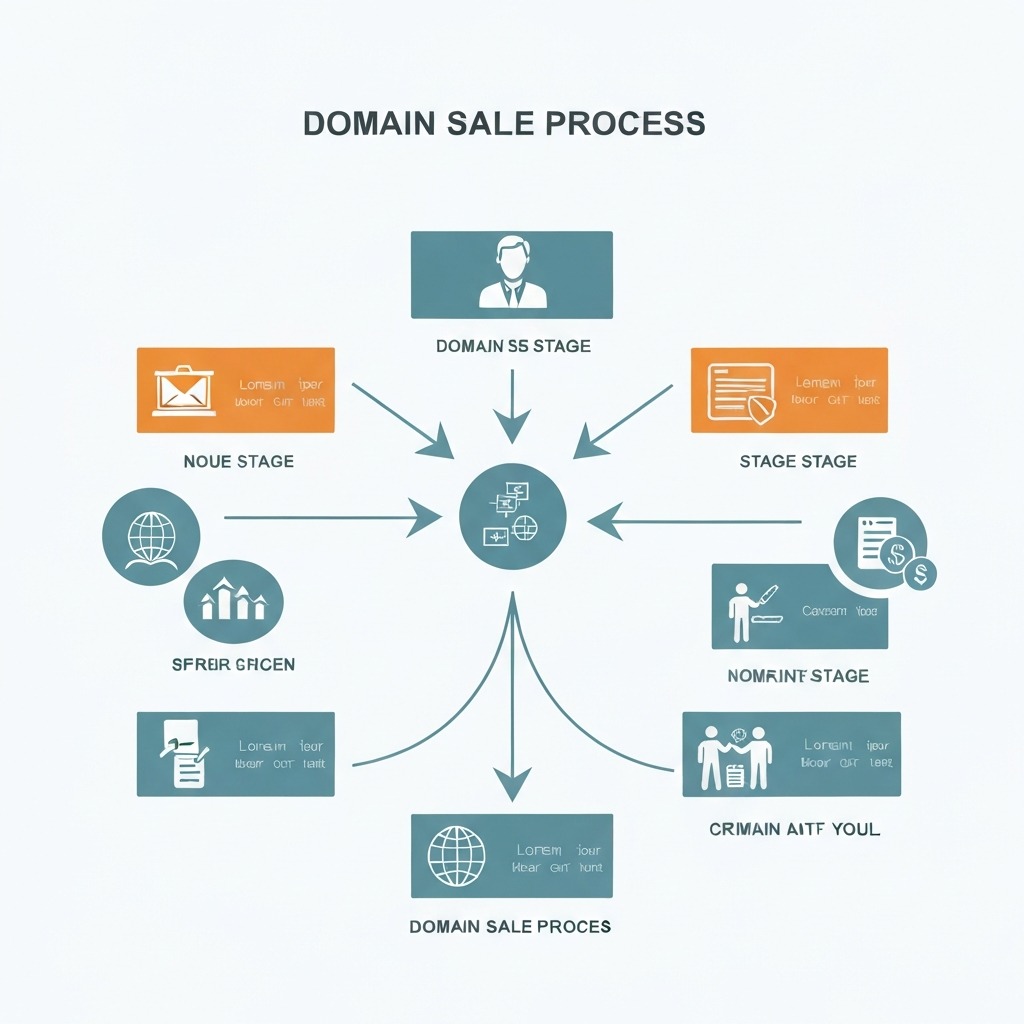
Every .ai domain sale passes through three distinct phases. First is the listing and exposure phase, where the domain is made available on marketplaces, listed on landing pages, and potentially promoted through outbound efforts. Second is the inquiry and negotiation phase, where interested buyers make contact and pricing discussions begin. Third is the closing phase, where terms are agreed, payment is processed, and the domain is transferred.
For premium .ai domains, the first phase may be extremely short — sometimes a domain attracts inquiries within hours of being listed. For lower-tier domains, the first phase can stretch for months or even years. Understanding which phase consumes the most time for your specific domain helps you set appropriate expectations and choose the right sales strategy.
 ## Sale Timelines by Domain Quality Tier
Not all .ai domains are created equal, and the quality tier of your domain is the single most important factor in determining how long it will take to sell. Understanding where your domain falls in the quality spectrum helps you set realistic timeline expectations.
Ultra-Premium Tier (Six and Seven Figures)
Ultra-premium .ai domains are the crown jewels of the extension: single generic words, exact-match industry terms, and ultra-short letter combinations. Think of domains like Voice.ai ($1.5 million), Chat.ai ($1.2 million), Bot.ai ($1.2 million), and Data.ai ($1.8 million). These domains command the highest prices because they represent entire categories within AI.
The timeline for ultra-premium .ai domains is paradoxical. On one hand, these domains attract the most inbound interest, often generating inquiries within weeks of being listed. On the other hand, the buyer pool at six- and seven-figure price points is extremely small. A domain like Security.ai ($1 million) or Work.ai ($1.05 million) may receive dozens of inquiries from buyers who can only afford $10,000 to $50,000, while the right corporate buyer who can pay seven figures may take 6 to 18 months to materialize.
Typical timeline: 3 to 18 months for a market-rate sale, though some ultra-premium .ai domains have sold in under 30 days when the right buyer was actively searching.
Premium Tier (Five Figures to Low Six Figures)
The premium tier includes strong single-word domains, compelling two-word combinations, and short brandable names. Domains like Draw.ai ($500K), Lotus.ai ($400K), Law.ai ($350K), Adapt.ai ($300K), and Music.ai ($275K) fall into this category. These are desirable enough to attract regular interest but are priced at levels that many funded startups can afford.
This tier often has the most predictable timelines because the buyer pool is large enough to generate consistent interest, and the price points are achievable for Series A and Series B companies. If your domain clearly maps to an AI use case — such as a specific industry vertical or product function — the timeline shortens further because potential buyers can easily envision the domain's value.
Typical timeline: 3 to 12 months for well-priced domains in active categories.
Mid-Tier (Low Four Figures to Mid-Five Figures)
Mid-tier .ai domains include decent two-word combinations, longer brandable names, and niche industry terms. These are domains that have clear value but require more effort to find the right buyer. Names like Speed.ai ($165K) and Amber.ai ($115K) represent the upper end of this tier, while many solid two-word .ai domains trade in the $2,000 to $15,000 range.
The challenge with mid-tier domains is that they often fall into a pricing gap. They are too expensive for casual buyers but not prestigious enough to attract corporate acquirers. Success in this tier depends heavily on your sales approach and willingness to invest time in outbound marketing.
Typical timeline: 6 to 24 months, with significant variation based on sales effort and market conditions.
Lower Tier (Under $2,000)
Lower-tier .ai domains include longer names, hyphenated domains, and names that do not have an obvious connection to AI applications. These domains can still sell, but they require patience and often trade at prices that barely exceed renewal costs.
Typical timeline: 12 to 36+ months, and many domains in this tier may never sell at meaningful prices.
How Price Point Affects Time to Sale
Even within the same quality tier, your asking price dramatically influences your sale timeline. Pricing is both an art and a science in the .ai domain market, and getting it wrong in either direction costs you either money or time.
The Price-Speed Tradeoff
There is an inescapable relationship between price and speed in domain sales. If you price a strong .ai domain at 50% below market value, it will likely sell within days or weeks. If you price it at 200% above market value, it may sit for years without a single serious offer. Most sellers want to maximize their return, which means finding the sweet spot where the price is high enough to capture the domain's full value but low enough to attract buyers within a reasonable timeframe.
Historical sale data from NameBio and other sources shows that .ai domains priced within 20% of comparable sales typically sell 40% to 60% faster than those priced significantly above comparables. The challenge is that .ai comparables are still relatively scarce, making precise pricing difficult. For more insight on valuation, see our guide on how much your .ai domain is worth.
Pricing Strategies and Their Timeline Impact
Fixed price listings on platforms like Afternic, Sedo, and Dan.com tend to sell faster when the price is clearly displayed. Buyers who see a reasonable price are more likely to initiate a purchase immediately. However, fixed prices can also anchor negotiations too low if the domain is undervalued.
Make offer listings extend the timeline but often result in higher final prices. The downside is that many potential buyers will not bother making an offer if they have no price reference, reducing the total number of inquiries you receive.
Auction formats compress the timeline to a fixed window (typically 7 to 14 days) but only work well for domains with sufficient demand to generate competitive bidding. For more on auction strategies, our GoDaddy auctions guide covers the process in detail.
The Anchoring Effect
Your initial asking price creates an anchor that shapes all future negotiations. If you list a domain at $50,000 and later reduce it to $25,000, buyers perceive a discount and may act faster. If you list at $10,000 and later increase to $25,000, buyers feel the price is unfair. This means your initial listing price should be carefully considered — it is better to start slightly high and reduce than to start low and attempt to increase.
Inbound vs Outbound Sales Approaches
The sales approach you choose has a massive impact on your timeline. Inbound strategies rely on buyers finding your domain, while outbound strategies involve proactively reaching potential buyers. Each has distinct timeline implications.
Inbound Sales: Waiting for the Right Buyer
Inbound sales occur when a buyer discovers your domain and initiates contact. This can happen through marketplace listings (Sedo, Dan.com, Afternic), WHOIS lookups, landing page contact forms, or search engine results. The advantage of inbound sales is that buyers who reach out are already interested, which shortens the negotiation phase. The disadvantage is that you have limited control over when — or if — the right buyer appears.
To maximize inbound inquiries, you need strong marketplace presence. List your domain on all major platforms and ensure your landing page includes clear contact information and, optionally, a price or price range. Domains with active landing pages receive 3x to 5x more inquiries than parked pages with generic advertising, according to data shared by aftermarket professionals.
Inbound timeline: Highly variable — premium domains may receive inquiries within days, while mid-tier domains may wait months between inquiries.
Outbound Sales: Taking Control of the Timeline
Outbound sales involve identifying potential buyers and reaching out to them directly. This could mean emailing AI startups, contacting companies in relevant industries, or leveraging LinkedIn to connect with founders and brand managers. Outbound sales give you much more control over the timeline but require significant effort and skill.
The most effective outbound approach for .ai domains targets companies currently using suboptimal domain names. If a startup called "VoiceAI Technologies" is operating on voiceaitech.com, they are a natural prospect for Voice.ai or similar domains. Tools like Crunchbase, LinkedIn, and Product Hunt can help identify these prospects.
Outbound timeline: 2 to 6 months for focused campaigns targeting well-matched prospects. Response rates for cold outreach in domain sales typically range from 2% to 8%, meaning you may need to contact 50 to 200 prospects to generate a handful of serious conversations.
The Hybrid Approach
The most effective sellers combine both strategies. They list domains on major marketplaces for inbound exposure while simultaneously running targeted outbound campaigns. This hybrid approach typically produces the fastest results because it maximizes the number of potential touchpoints with buyers.
If you are deciding between approaches, consider reading our article on how to sell your .ai domain for a comprehensive breakdown of both strategies.
 ## What Accelerates a .ai Domain Sale
Several factors can dramatically shorten your sale timeline. Understanding and leveraging these accelerators can mean the difference between a sale in weeks versus a sale in years.
Industry Momentum and Trending Categories
When a specific AI vertical is experiencing a surge of investment and media attention, domains in that category sell faster. The rapid growth of generative AI in 2023-2024 created a buying frenzy for domains related to chat, image generation, and content creation. Similarly, the expansion of AI into healthcare, legal, and financial services in 2025-2026 has accelerated sales in those verticals.
If your domain aligns with a trending category, timing your sales push to coincide with peak interest can dramatically shorten the timeline. Monitor AI industry news, funding rounds, and conference topics to identify when your domain's category is most in demand.
Multi-Platform Listing
Domains listed on multiple platforms sell faster simply because they are seen by more potential buyers. At minimum, list your .ai domain on Sedo, Dan.com, and Afternic. Consider also listing on GoDaddy Auctions, Epik, and specialist AI domain marketplaces if they exist. Our guide on the best platforms to buy and sell .ai domains covers each option in detail.
Professional Landing Pages
A professional landing page with clear branding, a contact form, and compelling copy about the domain's potential uses signals seriousness and professionalism. Buyers are more likely to engage with a domain that has a polished landing page versus one that shows generic registrar parking.
SEO and Organic Visibility
Some .ai domain sellers create simple content on their landing pages targeting searches related to the domain's keyword. For example, a seller of Analytics.ai might create a brief page about AI analytics trends, driving organic traffic that includes potential buyers.
Competitive Pricing Based on Comparable Sales
Pricing your domain based on actual comparable sales — rather than aspirational values — is perhaps the single most impactful accelerator. Tools like NameBio provide historical sale data that helps you identify realistic price ranges. A domain priced at market rate will always sell faster than one priced at a multiple of market rate.
Offering Flexible Payment Terms
Many buyers, especially startups, cannot pay five or six figures upfront. Offering payment plans through platforms like Dan.com (which supports installment payments) can dramatically expand your buyer pool and shorten sale timelines.
What Slows Down a .ai Domain Sale
Just as certain factors accelerate sales, others create drag that extends your timeline. Recognizing these obstacles allows you to address them proactively.
Overpricing Relative to Market Comparables
This is the number one reason domains sit unsold for years. Sellers often develop emotional attachments to their domains and set prices based on what they hope to receive rather than what the market will bear. If comparable .ai domains are selling for $10,000 to $30,000 and you are asking $150,000, you should expect a very long wait.
Review recent sale data regularly and be willing to adjust your price. The .ai market is still establishing its pricing benchmarks, and what seemed like a fair price six months ago may be too high or too low today. Understanding what makes an .ai domain valuable helps you assess your pricing objectively.
Poor or Missing Landing Pages
A parked page with generic ads tells potential buyers nothing about the domain's value and makes it look abandoned. Worse, some parked pages display competitor ads, which can actively drive away interested parties.
Lack of Sales Effort
Listing a domain on a single marketplace and waiting is not a sales strategy. Domains that sell quickly almost always have active sellers behind them — people who are monitoring inquiries, responding promptly, following up with prospects, and actively marketing the domain.
Unclear Use Case
Domains with ambiguous or unclear applications take longer to sell because buyers cannot immediately envision how they would use the name. A domain like Law.ai (sold for $350K) has an obvious use case, while an abstract or invented word with no clear AI connection requires more explanation and imagination from potential buyers.
Poor Extension Awareness
Despite the growth of .ai, some potential buyers still do not know it exists or do not consider it a serious alternative to .com. This is changing rapidly, but it remains a factor that extends sale timelines, particularly for buyers outside the tech industry.
Renewal Cost Considerations
The .ai extension has higher renewal costs than .com, typically around $80 to $100 per year depending on the registrar. While this is trivial for premium domains, it matters for mid-tier and lower-tier names where the annual carrying cost eats into potential profits and discourages speculative holding.
The Patience Factor: Why Holding Often Pays Off
One of the most counterintuitive lessons in .ai domain investing is that patience frequently translates to dramatically higher returns. The temptation to accept the first reasonable offer is strong, but historical data suggests that waiting often pays off.
Case Studies in Patient Selling
Consider the trajectory of major .ai domain sales. Many of the domains that have sold for six and seven figures were held for years before the right buyer appeared. X.ai sold for approximately $5 million, but the seller held the domain through years of relatively low .ai market activity before the surge in AI company formation created the conditions for a premium sale.
Similarly, domains like Get.ai ($909K) and Send.ai ($859K) represent cases where patient sellers who waited for market conditions to mature were rewarded with prices that would have been unthinkable just a few years earlier.
The Rising Tide Effect
The .ai domain market is still in its growth phase. As more AI companies launch, more venture capital flows into AI startups, and more enterprises adopt AI branding, the overall demand for .ai domains continues to increase. This means that a domain which might sell for $20,000 today could potentially sell for $40,000 or more in 12 to 18 months if the market continues its current trajectory.
Of course, this is not guaranteed. Market conditions can change, and holding carries ongoing renewal costs. But for quality domains with clear AI applications, the general trend favors patient sellers. Our analysis of .ai domain market trends in 2026 explores the factors driving this continued growth.
When Patience Becomes Stubbornness
There is a fine line between patient selling and stubborn overpricing. If your domain has been listed for two years without a single serious inquiry, the market is telling you something. Either the domain is overpriced, the name does not have the market appeal you believe it does, or your marketing approach is ineffective.
A useful rule of thumb: if you have not received at least 2 to 3 inquiries within 6 months of active, multi-platform listing, reassess your pricing and marketing strategy. If you are receiving inquiries but they are all well below your asking price, your price may be out of line with market expectations.
Setting Realistic Expectations by Category
Different categories of .ai domains have different natural sale timelines. Setting realistic expectations based on your domain's category prevents frustration and helps you plan your investment strategy accordingly.
Generic Single-Word Domains
Domains representing broad concepts — like Cloud.ai ($600K), Wisdom.ai ($750K), or Driver.ai ($1M) — are the most sought-after and typically sell the fastest among premium names. These domains appeal to a wide range of potential buyers across multiple industries, which naturally shortens the timeline. If priced at or near market rates, generic single-word .ai domains typically sell within 3 to 12 months.
Industry-Specific Domains
Domains that target a specific industry — like Law.ai ($350K) or Music.ai ($275K) — have a narrower but highly motivated buyer pool. The timeline for these domains depends on the size and activity level of their target industry. Fast-growing sectors like AI healthcare or AI fintech produce buyers more quickly than slower-moving industries.
Typical timeline: 4 to 15 months for well-priced industry domains in active sectors.
Two-Letter and Ultra-Short Domains
Two-letter .ai domains occupy a unique position in the market. Their extreme scarcity (only 676 possible combinations) makes them inherently valuable, but their utility depends on whether the letter combination has brand appeal. For a deeper exploration of this category, see our analysis of two-letter .ai domain values.
Typical timeline: 3 to 12 months for desirable combinations, 12 to 24 months for less intuitive pairs.
Brandable Invented Words
Domains that feature invented but pronounceable words can be compelling brands, but they require buyers who are specifically looking for that style of name. Unlike generic words, brandable inventions do not have an obvious market of buyers searching for that exact term.
Typical timeline: 6 to 24 months, depending heavily on the quality and memorability of the invented word.
Compound and Descriptive Domains
Two-word descriptive domains like "SmartAnalytics.ai" or "DeepLearn.ai" have clear use cases but face competition from shorter alternatives. These domains appeal to buyers who want descriptive clarity over brevity.
Typical timeline: 6 to 18 months for strong combinations, longer for weaker pairings.
Developing Your Sales Timeline Plan
Regardless of your domain's category, developing a structured sales timeline plan helps maintain focus and momentum. Here is a suggested framework:
- Month 1: List on all major platforms, set up professional landing page, research comparables and set price.
- Months 2-3: Begin outbound outreach to the most obvious potential buyers.
- Months 4-6: Evaluate inquiry volume and quality. Adjust price if necessary.
- Months 7-12: Expand outbound efforts, consider broker engagement for premium names.
- Month 12+: Reassess strategy entirely. Consider auction format, price reduction, or broker partnership.
Understanding the overall .ai domain investment landscape helps you contextualize your individual domain's sale timeline within broader market dynamics. Additionally, if your domain has been on the market for an extended period, exploring how to flip .ai domains for profit may offer alternative strategies worth considering.
Sources
- NameBio — Historical domain sales database and .ai sales records: https://namebio.com
- DN Journal — Domain industry news, sales reports, and market analysis: https://dnjournal.com
- DomainInvesting.com — Domain investment insights and aftermarket analysis: https://domaininvesting.com
- Sedo Blog — Marketplace trends, pricing data, and seller resources: https://sedo.com/blog/
- GoDaddy Blog — Domain aftermarket guides, auction data, and industry insights: https://godaddy.com/resources/news
- ICANN — Domain registration statistics and extension data: https://icann.org