How Long Does It Take to Sell an AI Domain? A Realistic Timeline from Listing to Close
Selling an AI domain is not like selling a used car. There is no Kelley Blue Book, no instant offer, and no guarantee that a domain you listed today will sell this year — or even next. But that does not mean the process is mysterious. With the right platform, the right price, and the right approach, premium .ai domains do sell. The key is understanding what the timeline actually looks like before you commit to a strategy.
The time it takes to sell a .ai domain ranges from a few weeks for deeply discounted mid-market names, to several years for ultra-premium exact-match domains priced at six or seven figures. Most transactions for domains in the $10,000 to $100,000 range close within three to twelve months — but only if they are listed on the right platforms with the right exposure. This article breaks down the full lifecycle of an AI domain sale, platform by platform, price tier by price tier, and phase by phase.
Table of Contents
- The Full AI Domain Sales Timeline
- Phase 1 — Preparation: Setting Your Price and Choosing a Platform
- Phase 2 — Listing and Exposure: Getting Your Domain in Front of Buyers
- Phase 3 — Buyer Inquiry and Qualification
- Phase 4 — Negotiation
- Phase 5 — Escrow and Transfer
- Timeline by Price Tier: What to Realistically Expect
- Why Hold Periods Matter: What Happens Between Listing and Sale
- How to Accelerate a Slow-Selling AI Domain
- Frequently Asked Questions
The Full AI Domain Sales Timeline
Every AI domain sale moves through the same five phases, regardless of price. The length of each phase depends on your pricing, platform choice, buyer type, and how aggressively you pursue a buyer. Here is the sequence:
- Preparation — 1 to 4 weeks
- Listing and initial exposure — 2 weeks to 3 months
- Buyer inquiry and qualification — 1 to 8 weeks
- Negotiation — 1 week to 3 months
- Escrow and transfer — 3 to 10 business days
That puts the fastest realistic total timeline at approximately 5 to 8 weeks for a domain priced correctly and listed on the right platform with strong buyer demand. The slowest realistic timeline for a quality domain that simply has not found its buyer yet is 2 to 4 years.
Most sellers enter the process with unrealistic expectations on both ends. Some expect a six-figure domain to sell in days because they saw a headline about Bot.ai selling for $1.2 million. Others worry that silence after a month means the domain will never sell. The truth sits in the middle. Premium domains priced at market value sell when the right buyer arrives. The seller's job is to make sure the domain is visible, priced fairly, and easy to inquire about when that buyer does appear.
Phase 1 — Preparation: Setting Your Price and Choosing a Platform
The preparation phase is the most underestimated part of the process. Most sellers rush past it, slapping a price on a domain and listing it everywhere at once. That approach leads to confusion, pricing inconsistencies across platforms, and buyers who lose trust before they even make contact.
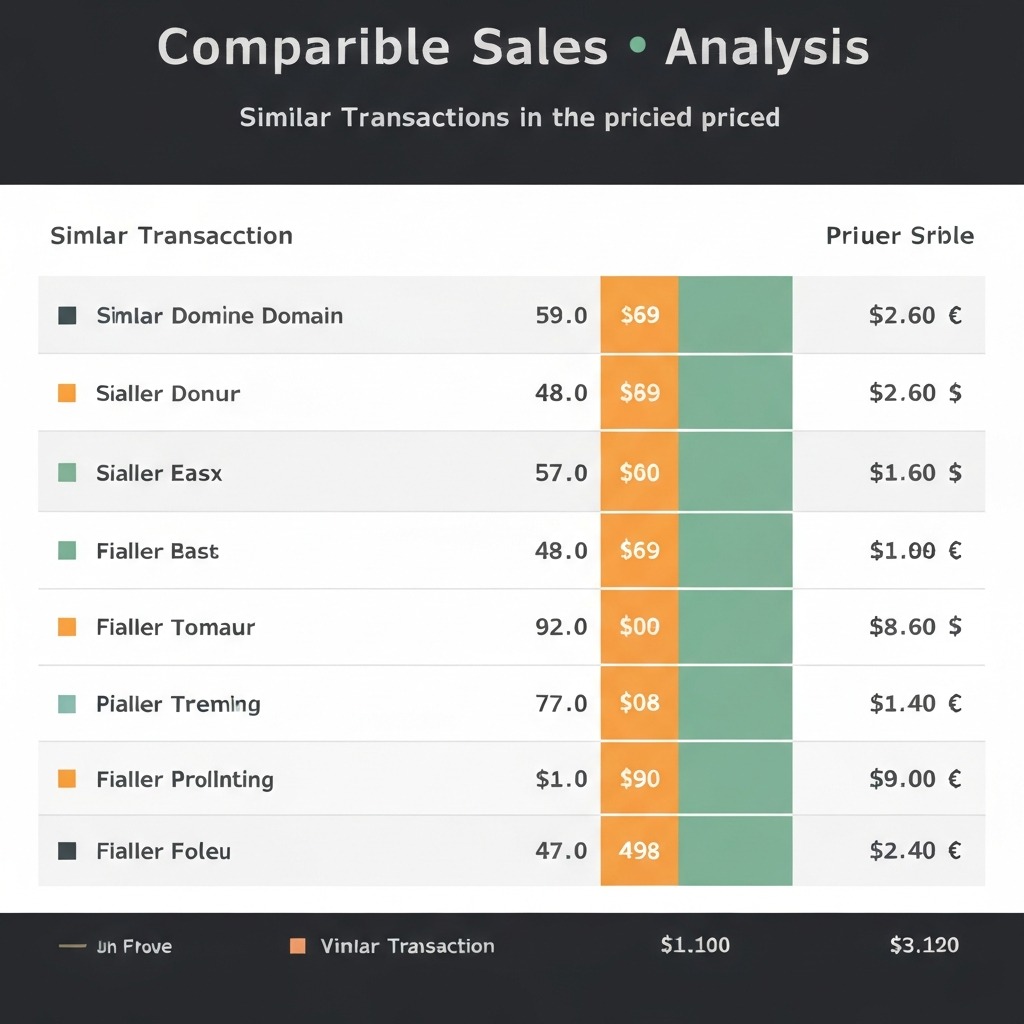
Good preparation starts with research. Before you list your AI domain anywhere, benchmark it against comparable sales. NameBuzz tracks verified and widely reported .ai domain transactions including Cloud.ai at $600,000, Lotus.ai at $400,000, Speed.ai at $165,000, Amber.ai at $115,000, and stt.ai at $74,000. These benchmarks give you a real sense of where your domain sits relative to the market.
Setting your price
Pricing strategy matters more than most sellers realize. Price too high and you get no inquiries. Price too low and you leave money on the table while attracting low-quality tire-kickers. There are three pricing models:
Buy It Now (BIN): Set a fixed price and let buyers purchase immediately. Best for domains with clear market value and strong demand. BIN listings on Afternic and Sedo typically see faster buyer responses for domains priced between $5,000 and $50,000.
Auction: Start at a minimum bid and let the market determine the price. Best for domains with genuine scarcity and multiple interested parties. GoDaddy Auctions is the dominant platform for .ai domain auctions.
Offer-based: Allow buyers to submit offers without a listed price. Best for sellers who want flexibility and are comfortable negotiating. This approach is slower but can yield higher prices in the right situation.
The choice between these models should reflect your domain's quality, your timeline, and your negotiating comfort level. If you own a single-word .ai domain, you can generally command a higher BIN price than a three-word compound domain. If you own a descriptive phrase .ai domain, an offer-based approach with targeted outreach may outperform a passive listing.
Phase 2 — Listing and Exposure: Getting Your Domain in Front of Buyers
Listing your domain is not as simple as submitting it to a marketplace and waiting. Different platforms reach different buyer pools, and most serious buyers for premium AI domains do not browse general domain marketplaces the way a casual buyer might. They work with brokers, receive inbound offers from network contacts, or search directly for specific names.
Major platforms and their reach
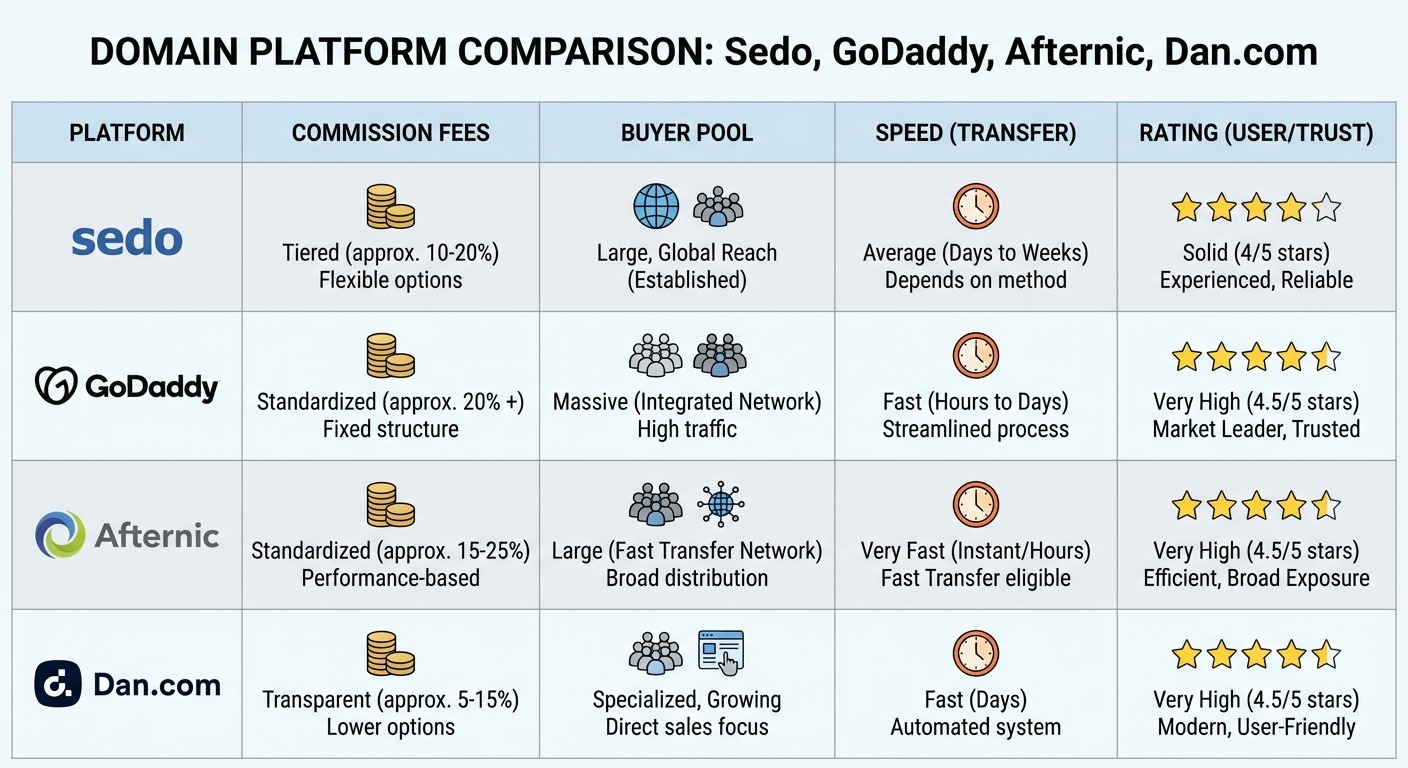
Afternic is the largest IDN (internationalized domain name) marketplace and the first place most domain investors check. Afternic listings feed into GoDaddy's network, which receives over 45 million visitors per year. For any .ai domain with meaningful commercial value, an Afternic listing is almost always worth having. The main drawback is that Afternic's network skews toward domain investors rather than end buyers, which can sometimes result in low-ball offers from resellers.
Sedo is a global domain marketplace with a strong brand, robust transfer infrastructure, and a large buyer database. Sedo's brokerage service also allows you to list with a minimum price and let their team actively seek buyers on your behalf. Their fee structure (10% for domains under $5,000, with negotiable rates for higher-value sales) is worth understanding before you list.
GoDaddy Auctions specializes in domain auctions and is particularly effective for domains priced under $50,000 where direct search traffic is lower. GoDaddy's bidder pool is active and includes both investors and end buyers.
Dan.com (operated by Undeveloped) offers a streamlined listing and transfer process with lower fees than traditional brokers. Dan is popular among sellers who want a clean, simple transaction without heavy platform involvement.
The hold period problem
One of the most confusing aspects of listing an AI domain for sale is the concept of hold periods — the time you must wait before a listed domain can be transferred to a new registrar or removed from a platform. Every major ccTLD (country code top-level domain) has a registry-defined transfer lock period.
For .ai domains, the hold period after listing can be up to 60 days. This means if you list your domain on Afternic and receive a buyer offer in the first week, you may still need to wait before you can initiate the transfer. Most platforms handle this automatically, but sellers who are unaware of the hold period often panic when a seemingly ready buyer cannot immediately receive the domain.
For standard .com domains, the hold period is typically 60 days after registration or last transfer. For .ai domains, the same 60-day rule applies from the registry, but the transfer process itself is handled by the .ai registry (Met Namibia Communications) which has its own procedures. Understanding this in advance prevents frustration during the closing phase.
Phase 3 — Buyer Inquiry and Qualification
When an inquiry arrives, your response speed and quality matters enormously. The best buyers for premium AI domains are busy people — founders, investors, corporate strategists — who are evaluating multiple naming options simultaneously. If you take three days to respond, they have often already moved on to the next name on their list.
Buyer qualification is also important. Not every inquiry is serious. Broker inquiries that ask for "your best price" without any stated context are often speculative attempts to learn your floor. Genuine buyers will typically indicate their intended use, their timeline, and sometimes their budget range. A response template that acknowledges the inquiry, asks a brief clarifying question, and expresses flexibility for a serious conversation will serve you better than either an immediate hard price or dismissive silence.
For domains priced above $50,000, it is worth working with a domain broker or using a platform with brokerage services. Sedo Brokerage, Name.com's agent program, and independent brokers like Grit Brokerage and Brandify handle high-value .ai transactions regularly and have relationships with buyers you may not be able to reach directly.

Phase 4 — Negotiation
Domain negotiations can be fast and professional, or slow and frustrating. Most transactions go through at least one round of counter-offers before reaching agreement. Here are the key dynamics:
Price negotiation: The final price is rarely the asking price. For .ai domains priced between $10,000 and $100,000, final prices typically land 15% to 30% below asking for motivated sellers. For sellers with strong conviction and limited liquidity needs, holding firm at asking is legitimate — but it extends the timeline.
Bulk discounts: If a buyer is considering multiple domains from your portfolio, they will often ask for a package price. This is worth planning for in advance. Having a clear sense of your minimum acceptable price per domain and your portfolio discount threshold prevents reactive, value-destroying decisions mid-negotiation.
Payment terms: For transactions above $10,000, payment is almost always facilitated through escrow. Escrow.com is the standard in the domain industry. For transactions above $100,000, buyers may request a phased payment (e.g., 50% upfront, 50% upon transfer verification), which is reasonable to accommodate with an escrow service that supports multi-step releases.
VAT and transfer fees: These are often overlooked by first-time sellers. Escrow fees typically run 0.5% to 1% of the transaction value, capped at reasonable amounts per tier. Registry transfer fees for .ai domains are nominal but should be factored into your cost basis.
Phase 5 — Escrow and Transfer
The final phase is the most technically straightforward but still requires attention. A domain transfer involves coordination between the seller, buyer, their respective registrars, and sometimes the registry itself.
The standard escrow transfer sequence:
- Buyer deposits funds into escrow
- Seller initiates domain transfer to buyer
- Buyer confirms transfer authorization
- Escrow releases funds to seller upon verified transfer completion
- Transfer completes at registry level (typically 5 to 10 business days for .ai)
For .ai domains specifically, the transfer is processed through the .ai registry operated by Met Namibia Communications. Unlike .com transfers which happen between any two ICANN-accredited registrars, .ai transfers require coordination with the single registry. This adds a layer of complexity that .com sellers do not face, and it is one reason why buyers for .ai domains often prefer platforms (like Sedo or Afternic) that have built-in transfer procedures for the extension.
Most delays in the closing phase come from either incorrect WHOIS contact information on the seller's side, transfer locks that were not removed before listing, or buyers who send funds before confirming the transfer authorization on their end. A clean, informed process takes 5 to 10 business days end to end.
Timeline by Price Tier: What to Realistically Expect
Understanding where your domain sits in the market helps calibrate your timeline expectations. Here is a practical breakdown based on observable patterns in the .ai domain aftermarket:
Domains priced under $5,000: These move relatively quickly on BIN listings at Dan.com or Afternic. Most transactions complete within 2 to 6 weeks of listing, assuming accurate pricing and a clean transfer history. Buyer pool is predominantly domain investors buying on value arbitrage.
Domains priced $5,000 to $50,000: This is the mid-market where most .ai domain sales live. Expect 1 to 6 months on a passive listing with BIN pricing. Outreach-based sales (directly approaching potential end buyers or working with a broker) typically run 2 to 9 months. The buyer pool mixes investors with end buyers — startups, small agencies, solo founders.
Domains priced $50,000 to $250,000: At this tier, passive marketplace listings are no longer sufficient. Active outreach, broker representation, or both are typically required. Expect 3 to 18 months for a well-priced domain with strong positioning. Buyer pool is almost exclusively end buyers or portfolio investors with specific vertical interest.
Domains priced above $250,000: These are ultra-premium transactions requiring broker-level involvement, NDA-protected buyer conversations, and often off-market channels. Timeline ranges from 6 months to several years. The number of qualified buyers for a $250,000-plus .ai domain may be in the single digits. That is not a market failure — it is just the reality of concentrated value at the very top of a niche aftermarket.
For context, Bot.ai sold for $1.2 million, Law.ai sold for $350,000, and Amber.ai sold for $115,000 — each representing a different price tier, negotiation dynamic, and closing timeline.
Why Hold Periods Matter: What Happens Between Listing and Sale
Domain hold periods are not a technicality — they can disrupt a transaction if you are not aware of them. Here is what every .ai domain seller needs to understand:
The 60-day rule applies to transfers, not listings. You can list your domain for sale at any time. The transfer lock is what you cannot bypass until 60 days after registration or the last transfer. Listing your domain while it is in a hold period is perfectly legal and common. Buyers who attempt to push a transfer during the hold period will simply be blocked by the registry.
If you transferred your domain to a new registrar recently, that 60-day clock restarts. Many sellers inadvertently trigger a new hold period by moving their domain to a new registrar (e.g., moving from Namecheap to GoDaddy) right before listing it for sale. This is one of the most common and preventable delays in AI domain sales.
Renewal timing affects buyer confidence. If your domain expires in 90 days and you are in active negotiations, buyers will either ask for the domain to be renewed at your cost as a condition of sale, or they will use the short expiry as leverage to lower their offer. Keeping your domain renewed 1 to 2 years in advance signals stability and removes a negotiating variable.
How to Accelerate a Slow-Selling AI Domain
If your domain has been listed for more than 6 months with no serious inquiries, it is worth auditing your approach rather than simply waiting.
Reassess pricing. No inquiry almost always means the price is above where the market currently is for your domain. You do not have to drop to fire-sale levels, but an adjustment of 10% to 20% often generates the first serious conversation.
Upgrade platform exposure. A Dan.com BIN listing alone is not enough for a domain in the $25,000+ range. List on Afternic (which feeds GoDaddy's buyer network), add a Sedo listing with brokerage support, and consider a direct outreach campaign to potential buyers in your domain's vertical.
Refine your listing copy. Many sellers undervalue their listing description. A well-written listing that explains the domain's commercial relevance, keyword value, brand potential, and comparable sales data is more likely to attract serious buyers than a bare listing with no context.
Approach end buyers directly. If your domain is in a specific industry — for example, law.ai, med.ai, fin.ai — reach out directly to companies in that vertical. Domain brokers do this professionally, but you can do it yourself for a fraction of the cost with basic research and outreach. This approach works best for exact-match or near-exact-match .ai domains with clear commercial meaning.
Frequently Asked Questions
How long does it typically take to sell a .ai domain on Afternic?
A .ai domain priced between $5,000 and $25,000 with a BIN listing on Afternic typically receives its first serious inquiry within 2 to 6 weeks. Domains priced above $50,000 or with unusual naming structures may take 3 to 6 months on a passive Afternic listing. Active broker involvement can shorten this significantly.
Does the 60-day transfer hold period apply to .ai domains?
Yes. Like most ICANN-regulated TLDs, .ai domains are subject to a 60-day transfer lock following any registration or transfer. This means if you recently moved your .ai domain to a new registrar, you cannot initiate a transfer to a buyer for up to 60 days. List your domain for sale during this period — you just cannot complete the physical transfer until the hold expires.
Should I use a broker to sell my AI domain?
If your domain is worth $50,000 or more, a domain broker is generally worth the commission (typically 10% to 15% of the sale price). Brokers have buyer relationships, negotiation experience, and the bandwidth to run a structured sales process while you focus on other priorities. For domains below $10,000, the math is tighter and a platform BIN listing is usually sufficient.
What is the average escrow timeline for a .ai domain transfer?
From the moment both parties agree on terms and the seller initiates the transfer, most .ai domain escrow and transfer processes complete within 5 to 10 business days. The longest variable is registry processing, which is faster for .ai than some other ccTLDs but still not instant. Escrow.com or Escrow.net are the standard services used.
Can I sell my AI domain if it is expiring soon?
You can list and negotiate the sale at any time. However, a domain with fewer than 60 days before expiration is a negotiating liability. Buyers either demand that you renew it before closing (which you should do regardless) or they use the short TTL (time to live) as justification to offer below your asking price. Renew for at least one year before listing, and ideally two, to remove this variable from negotiations.