Are .ai Domains Worth Buying in 2026? Honest Investment Analysis
The .ai domain extension has produced blockbuster sales like AI.com at $70 million and Data.ai at $1.8 million, but does that mean buying .ai domains in 2026 is a smart investment? This honest analysis examines real ROI scenarios, holding costs, liquidity risks, and market data so you can make an informed decision rather than chasing hype.
Maya Chen, Domain Investment Analyst · Last updated April 2026
Table of Contents
- The Current State of the .ai Domain Market
- The Bull Case: Why .ai Domains Could Be Worth Buying
- The Bear Case: Risks and Downsides of .ai Domain Investing
- Real ROI Scenarios: What Returns Can You Actually Expect?
- Holding Costs: The Hidden Drag on Your Returns
- Liquidity Challenges: Can You Actually Sell Your .ai Domains?
- Who Should and Shouldn't Buy .ai Domains in 2026
- How to Minimize Risk if You Decide to Invest
- Sources
The Current State of the .ai Domain Market
The .ai extension has become the undisputed darling of the domain investment world. Originally the country-code top-level domain (ccTLD) for the Caribbean island of Anguilla, .ai has been completely rebranded in the public consciousness as the domain extension for artificial intelligence. With the AI industry projected to exceed $500 billion in revenue by 2027, the question on every investor's mind is straightforward: are .ai domains still worth buying in 2026?
Record-Breaking Sales Tell One Story
The headline numbers are genuinely extraordinary. AI.com sold for a reported $70 million, making it one of the most expensive domain transactions in history. Data.ai changed hands for $1.8 million. Voice.ai fetched $1.5 million. Chat.ai and Bot.ai each sold for $1.2 million. Work.ai commanded $1.05 million, while Driver.ai and Security.ai both hit the $1 million mark.
These seven-figure sales are not ancient history either. The pace of high-value .ai transactions has accelerated considerably since 2023, with premium single-word .ai domains routinely selling for six figures. Get.ai sold for $909,000, Send.ai for $859,000, and Wisdom.ai for $750,000. Even names outside the obvious tech vocabulary have performed well — Cloud.ai sold for $600,000, Draw.ai for $500,000, and Lotus.ai for $400,000.
For a deeper look at the top transactions, see our breakdown of the biggest .ai domain sales ever.
Registration Volumes and Market Growth
The total number of .ai domain registrations has grown dramatically, surging past 500,000 active registrations as of early 2026. That growth rate outpaces nearly every other ccTLD over the same period. New registrations continue to climb quarter over quarter, driven by AI startups, enterprise companies pivoting to artificial intelligence branding, and speculative investors.
But Averages Tell a Different Story
Here is where the honest analysis begins. While the top-line sales are spectacular, they represent a tiny fraction of .ai domains that actually trade. The median sale price for .ai domains on major aftermarket platforms sits considerably lower than the headline figures suggest. According to NameBio data, the median .ai domain sale in 2025 was in the low four figures, and many domains listed for sale never receive a single offer.
This gap between the best-case outcomes and the typical outcome is the central tension in evaluating whether .ai domains are worth buying in 2026.

The Bull Case: Why .ai Domains Could Be Worth Buying
Let us start with the strongest arguments in favor of investing in .ai domains this year. There are legitimate reasons why thoughtful investors continue to allocate capital to this space.
Structural Demand From a Growing Industry
The AI industry is not a passing trend. Virtually every Fortune 500 company now has an AI strategy. Thousands of AI startups are being founded every quarter. Each of these companies needs a domain name, and many prefer the .ai extension because it immediately signals their industry focus. This creates ongoing, structural demand for quality .ai domains that is unlikely to diminish any time soon.
Unlike .io, which experienced a similar boom among tech startups in the 2010s, .ai has the advantage of being tied to an industry with a clear and enormous growth trajectory. Enterprise AI spending alone is forecast to grow at a compound annual rate above 30% through 2030, according to multiple analyst reports.
Brand Signal and Marketing Value
A .ai domain communicates something specific and valuable to customers, investors, and partners. When a company operates from a .ai address, it immediately positions itself within the artificial intelligence ecosystem. This brand signal has tangible marketing value, which is why companies are willing to pay premium prices for the right .ai name.
Consider that many AI companies have chosen .ai over .com even when the .com was available at a lower price. The extension itself has become a brand asset, much like how .io became a signal for developer tools and infrastructure companies. For more on what drives these premiums, read our analysis of what makes an .ai domain valuable.
Scarcity of Premium Names
There are a finite number of dictionary words, common brand-friendly terms, and short letter combinations available as .ai domains. The best names — single words, two-letter combinations, and industry-specific keywords — are already registered. This scarcity provides a floor for valuations of the highest-quality names.
Our guide to two-letter .ai domain values documents how these ultra-premium short domains have steadily appreciated over time, with virtually no two-letter .ai combinations remaining unregistered.
Comparable Extension Trajectories
Historical precedent offers some support for the bull case. The .io extension followed a similar adoption curve among tech companies, and premium .io domains have maintained and grown their value over a decade-plus timeframe. Single-word .io domains routinely sell for five and six figures on the aftermarket.
The .ai extension has the potential to follow or exceed this trajectory, given that the AI industry is significantly larger and faster-growing than the developer tools niche that propelled .io adoption.
The Bear Case: Risks and Downsides of .ai Domain Investing
No honest analysis of .ai domain investing would be complete without a thorough examination of the risks. These are real concerns that could significantly impact your returns.
Anguilla Controls the Registry
Perhaps the most underappreciated risk in .ai domain investing is the geopolitical factor. The .ai extension is a ccTLD administered by the government of Anguilla, a small British Overseas Territory in the Caribbean with a population of roughly 15,000 people. While Anguilla has every economic incentive to maintain a stable and business-friendly .ai registry — domain registration fees now represent a substantial portion of the island's GDP — the fact remains that a foreign government ultimately controls the rules.
Registry policy changes, pricing adjustments, or administrative disruptions could theoretically impact the value of .ai domains. This is not a hypothetical concern: other ccTLD registries have implemented policy changes that disrupted aftermarket values. The .ly registry (Libya) and .io registry (British Indian Ocean Territory) have both experienced governance issues that created uncertainty for domain investors.
High Registration and Renewal Costs
The annual registration and renewal cost for .ai domains is substantially higher than .com domains. While a .com renewal typically costs between $10 and $15 per year, .ai renewals generally run between $50 and $100 per year depending on the registrar. For investors holding a portfolio of dozens or hundreds of .ai domains, these renewal fees compound into a significant carrying cost.
A portfolio of 50 .ai domains at $75 per year in renewal fees costs $3,750 annually just to maintain. Over a five-year holding period, that is $18,750 in renewal costs alone — before accounting for any acquisition costs, platform listing fees, or time spent managing the portfolio.
Market Saturation and Competition
The success of .ai domains has attracted enormous competition. Every domain investor and their brother is now hand-registering, backordering, and bidding on .ai domains. This competition has driven up acquisition costs for quality names while simultaneously flooding the aftermarket with inventory.
When supply increases faster than demand, prices stagnate or decline. While demand for premium .ai names remains strong, the mid-tier and lower-tier segments of the market are increasingly crowded, making it harder to achieve meaningful returns on less exceptional names.
The .com Remains Dominant
Despite .ai's rise, .com remains the most recognized and trusted domain extension globally. Many end users and companies still default to .com for their primary web presence, using .ai only as a secondary or redirect domain. This preference for .com limits the ultimate ceiling on .ai domain valuations for many names.
A company called "Nexus" might pay $500,000 for Nexus.com but only $50,000 for Nexus.ai. The .ai version carries value, but the market consistently prices it below the equivalent .com for generic terms.
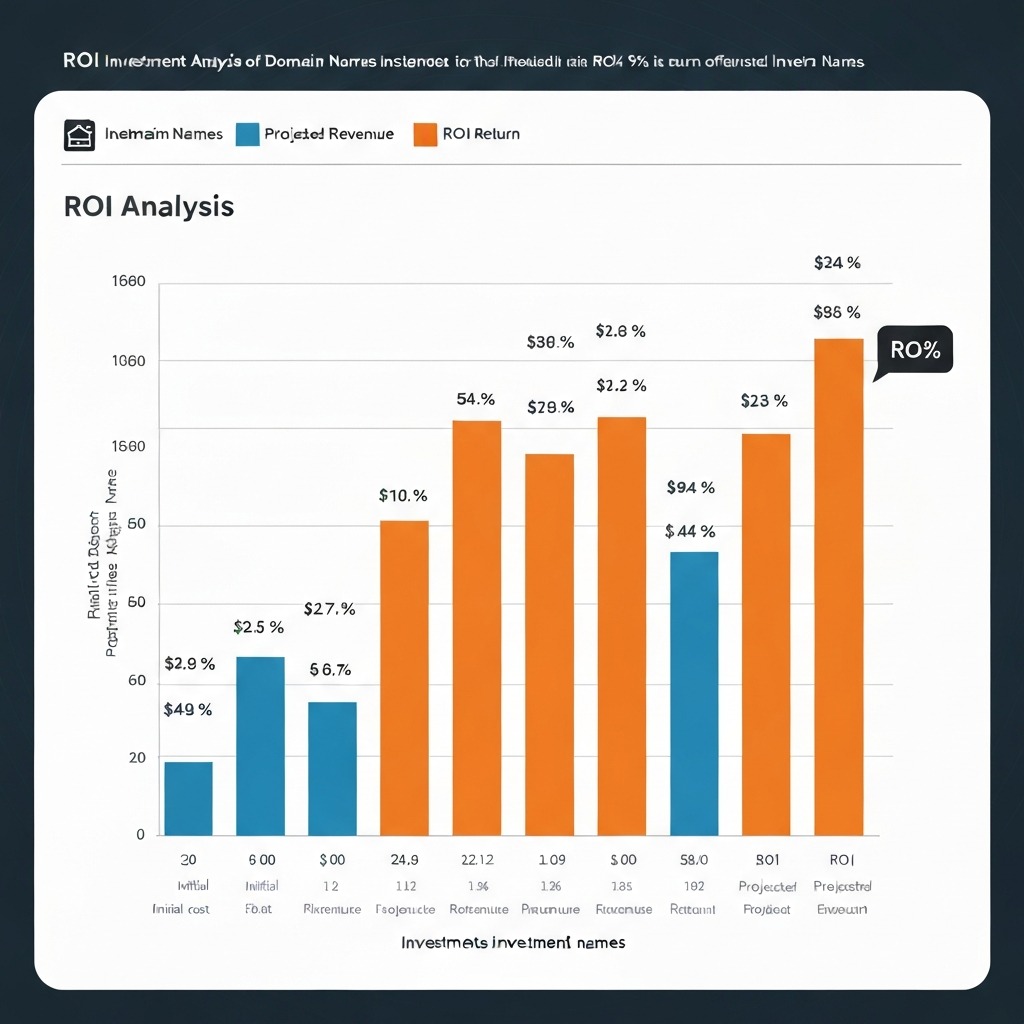
Real ROI Scenarios: What Returns Can You Actually Expect?
Let us move beyond anecdotes and examine realistic return scenarios based on actual market data. These scenarios assume you are buying domains at current aftermarket or hand-registration prices.
Scenario 1: Premium Single-Word Acquisitions
If you acquire a high-quality single-word .ai domain at the aftermarket — say, for $5,000 to $25,000 — and it hits with a well-funded end user, the returns can be extraordinary. Law.ai sold for $350,000, Music.ai for $275,000, and Speed.ai for $165,000. If you acquired any of these names for a few thousand dollars at registration, you achieved returns of 10x to 100x or more.
However, the probability of any individual domain achieving this outcome is quite low. For every Law.ai that sells for six figures, there are hundreds of comparable single-word .ai domains sitting unsold in investor portfolios. The expected value calculation must account for the many names that never sell at all.
Scenario 2: Mid-Tier Portfolio Approach
A more common approach is to build a diversified portfolio of 20 to 50 mid-quality .ai domains — two-word combinations, industry-specific terms, brandable names — acquired at or near registration cost. In this scenario, you might invest $5,000 to $10,000 in acquisition costs plus $3,000 to $5,000 per year in renewals.
Realistic outcomes for this approach: perhaps 10% to 20% of your portfolio sells within three years, at prices ranging from $500 to $5,000 per domain. A few names might hit bigger. Many will expire unsold. The net ROI after accounting for holding costs and unsold inventory is often modest — perhaps breakeven to 50% total return over three years. That translates to roughly 15% annualized at the optimistic end, which is decent but far from the 10x returns that domain investing headlines suggest.
Scenario 3: Hand-Registration Speculation
The lowest-cost entry point is hand-registering .ai domains at standard registration prices and hoping they appreciate or attract buyer interest. In 2026, the pool of available quality .ai names at hand-registration prices has thinned considerably. What remains tends to be three-word phrases, misspellings, very niche terms, or recently expired names of marginal quality.
Realistic ROI for hand-registration speculation in the current market: most names will not sell. Your return will primarily be determined by whether you can identify and register the rare overlooked gem before others do. For most investors, the expected return on a hand-registration strategy is negative after accounting for renewal costs.
For actionable tactics on domain flipping, see our guide on how to flip .ai domain names for profit.
Holding Costs: The Hidden Drag on Your Returns
Holding costs are the silent killer of domain investment returns. Too many investors focus exclusively on potential sale prices while ignoring the ongoing expenses that erode their actual returns.
Annual Renewal Fees
As noted above, .ai domains typically cost $50 to $100 per year to renew. This is four to seven times the cost of a .com renewal. For a portfolio investor, these costs add up quickly and must be factored into every investment decision.
A useful mental model: if a domain costs $75 per year to renew and you hold it for four years before selling, you need to sell it for at least $300 just to cover renewal costs — before accounting for any acquisition premium or your time.
Opportunity Cost
Capital tied up in .ai domains could be invested elsewhere. If you spend $10,000 acquiring .ai domains and the money would otherwise earn 8% annually in an index fund, your opportunity cost over a five-year holding period is approximately $4,700. This opportunity cost should be factored into any honest ROI calculation.
Platform and Listing Fees
Most domain investors list their names for sale on multiple platforms — Sedo, Afternic, Dan.com, and others. While many platforms charge commissions only on completed sales, some charge listing fees or require premium memberships for optimal visibility. These costs, while individually small, contribute to the overall drag on returns.
Time and Management Costs
Managing a domain portfolio requires time: monitoring expirations, responding to inquiries, negotiating sales, transferring domains, and tracking financials. If you value your time at even a modest hourly rate, the management overhead for a large portfolio is a meaningful cost.
For a comparison of where to list and sell, check our guide to the best platforms to buy and sell .ai domains.
Liquidity Challenges: Can You Actually Sell Your .ai Domains?
Liquidity — the ability to convert an asset to cash quickly and at a fair price — is one of the most important and least discussed aspects of domain investing. The .ai domain market has meaningful liquidity challenges that every investor should understand.
Sell-Through Rates Are Low
The domain industry as a whole has low sell-through rates. Even for .com domains, the annual sell-through rate for listed inventory is typically estimated at 1% to 3%. For .ai domains, which have a smaller buyer pool and shorter market history, sell-through rates may be even lower for average-quality names.
This means that if you list 100 .ai domains for sale today, statistical averages suggest that between one and three of them will actually sell within a year. The other 97 to 99 will continue to cost you renewal fees while generating zero revenue.
Thin Buyer Market
While .ai domains attract interest from AI companies and tech startups, the total pool of motivated buyers is smaller than the buyer pool for .com domains. A generic English word as a .com might attract interest from companies in dozens of industries worldwide. The same word as a .ai domain primarily attracts interest from companies in the artificial intelligence space or those wanting to signal AI capabilities.
This thinner buyer market means longer holding periods, less competition among buyers (which keeps sale prices lower), and greater difficulty finding a buyer at any given time.
Price Discovery Is Difficult
Unlike publicly traded stocks or even real estate, domain names do not have transparent, efficient price discovery mechanisms. Comparable sales data is incomplete — many transactions occur privately and are never reported. Appraisal tools like EstiBot and GoDaddy's domain appraisal service provide rough estimates for .com domains but are less reliable for .ai domains due to the smaller dataset of completed sales.
This opacity makes it harder to price your domains correctly. Price too high, and you attract zero inquiries. Price too low, and you leave money on the table. The lack of reliable pricing data creates friction in the market and contributes to low sell-through rates.
No Guaranteed Exit
Perhaps the most important liquidity consideration: there is no guaranteed exit for domain investments. Unlike a bond that matures at par or a rental property that generates ongoing cash flow, a domain name generates zero income while you hold it and only produces a return when sold. If you cannot find a buyer, your investment produces a negative return equal to your total holding costs.
Who Should and Shouldn't Buy .ai Domains in 2026
Based on the analysis above, here are our honest recommendations about who should and should not be investing in .ai domains right now.
You Should Consider .ai Domains If:
You have domain industry experience. Investors with existing expertise in domain valuation, aftermarket negotiation, and portfolio management are better positioned to identify undervalued .ai domains and execute profitable sales. The skills that produce returns in .com investing translate well to the .ai market.
You have a long time horizon. If you can afford to hold domains for five to ten years while covering renewal costs, you increase the probability of catching the right buyer at the right time. Domain investing rewards patience, and the .ai market is likely still in its early innings.
You are building a business with AI focus. If you are building a company in the AI space, acquiring your ideal .ai domain now — even at a premium — may be cheaper than buying it later as the market continues to mature. This is a business expense, not a speculative investment, and should be evaluated differently.
You can afford to lose your entire investment. This is not dramatic language — it is a realistic scenario. Domain investing is speculative, and individual domains can become worthless if market conditions change or buyer interest never materializes. Only invest capital you can genuinely afford to lose.
You Should Probably Avoid .ai Domains If:
You are looking for passive income. Domains do not generate cash flow while you hold them. If you need investments that produce regular income, domains are not the right asset class.
You have a short time horizon. If you need your capital back within one to two years, the low sell-through rates in the domain market make this unrealistic for most names. Quick flips do happen, but they are the exception rather than the rule.
You are investing money you cannot afford to lose. Given the speculative nature of domain investing and the real possibility of total loss on individual names, investing essential savings in .ai domains is inadvisable.
You believe every .ai domain will go up in value. This is a common misconception fueled by headline sales figures. The reality is that most .ai domains will not appreciate meaningfully, and many will ultimately be dropped as investors decide renewal costs are not worth the speculative upside.
How to Minimize Risk if You Decide to Invest
If you have weighed the pros and cons and decided that .ai domain investing aligns with your risk tolerance and time horizon, here are concrete strategies to improve your odds.
Focus Relentlessly on Quality
The single most important determinant of success in .ai domain investing is the quality of the names you acquire. Premium, single-word, dictionary-term .ai domains have demonstrated strong demand and rising values. Multi-word, obscure, or highly niche .ai domains have not.
Invest more in fewer, better names rather than spreading your capital across dozens of marginal domains. One excellent .ai domain purchased for $5,000 is likely a better investment than fifty mediocre ones acquired at $100 each — even though the total capital outlay is similar.
For a framework on evaluating quality, see our detailed guide on how much your .ai domain is worth.
Set Strict Portfolio Limits
Before you begin investing, set clear limits on total capital allocation, maximum price per domain, and maximum portfolio size. Decide in advance how many years you are willing to renew a domain before dropping it. These guardrails prevent the gradual portfolio creep that traps many domain investors into spending more than they intended on renewal fees.
Use Data to Guide Decisions
Study completed .ai domain sales on NameBio. Analyze pricing patterns on Sedo and Afternic. Understand which categories of .ai names actually sell versus which ones simply sit. Our article on .ai domain market trends in 2026 provides current data to inform your decision-making.
Data-driven investors consistently outperform those who rely on gut instinct or wishful thinking about what a domain "should" be worth.
Diversify Across Name Types
Within your .ai portfolio, diversify across different types of names: some single-word generics, some brandable coined words, some industry-specific terms. This diversification reduces the impact of any single market shift — for example, if AI regulation creates demand for compliance-related domains while reducing demand for consumer-facing AI terms.
Have an Exit Strategy
Before acquiring any domain, define your exit strategy. Who is the likely buyer? What price would you accept? How long are you willing to hold? Having a clear thesis for each acquisition makes it easier to evaluate whether a domain is meeting your expectations and when to cut your losses.
Monitor Renewal Economics Continuously
Review your portfolio quarterly and ruthlessly drop domains that no longer justify their renewal costs. A domain you acquired two years ago for $100 has now cost you $250 or more in renewals. If it has attracted zero inquiries and the market for that type of name has not strengthened, continuing to renew it is throwing good money after bad.
Consider the Tax Implications
Domain sales may be subject to capital gains taxes, and the treatment can vary depending on your jurisdiction and whether domains are considered capital assets or inventory. Consult with a tax professional before making significant domain investments, and factor potential tax obligations into your ROI calculations.
The Bottom Line: Are .ai Domains Worth Buying in 2026?
The honest answer is: it depends entirely on who you are, what you are buying, and how you approach the investment.
For experienced domain investors who focus on premium names, maintain strict portfolio discipline, and have the patience and capital to hold for several years, .ai domains remain one of the most compelling opportunities in the domain market. The AI industry's growth trajectory provides a structural demand tailwind that few other extensions can match.
For casual investors or newcomers hoping for quick, easy profits, the .ai market in 2026 is a challenging environment. The easiest money has likely already been made, competition for quality names is intense, holding costs are high relative to other extensions, and liquidity is limited. The gap between headline sales and typical outcomes is enormous.
The key is to approach .ai domain investing with the same rigor you would apply to any other speculative investment: do your research, understand the risks, set clear limits, and never invest more than you can afford to lose. The .ai extension has produced genuine, life-changing returns for some investors. It has also produced significant losses for others who bought the hype without understanding the economics.
Make your decision based on data and honest self-assessment, not on the excitement generated by record-breaking sales that represent a tiny fraction of all .ai domain transactions.
For more strategies and market intelligence, explore our comprehensive AI domain investment strategy guide and our analysis of whether .ai domains are a good investment.
Sources
- NameBio — .ai Domain Sales History and Comparable Sales Data — https://namebio.com
- DN Journal — Domain Sales Reports and Industry Analysis — https://dnjournal.com
- DomainInvesting.com — Domain Investment News, Trends, and Commentary — https://domaininvesting.com
- Sedo Blog — Domain Marketplace Insights and Sales Trends — https://sedo.com/blog/
- GoDaddy Blog — Domain Industry Updates and Registration Trends — https://www.godaddy.com/blog/
- Afternic — Domain Aftermarket Sales Platform and Pricing Data — https://www.afternic.com